

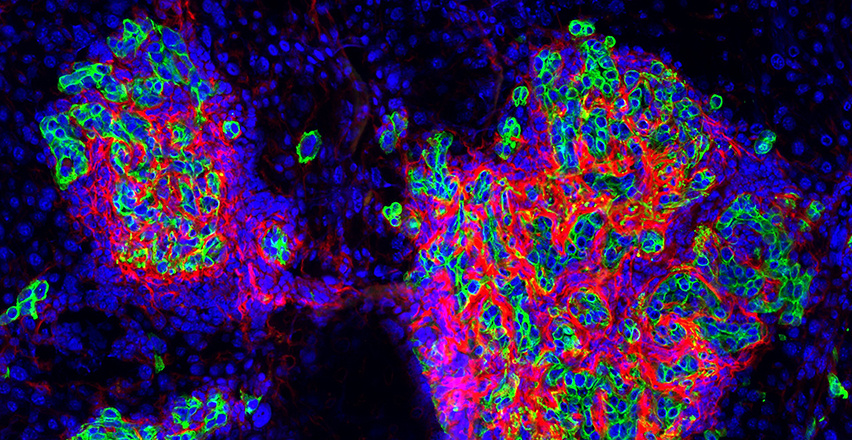
In order to grow or spread, cancer cells break down surrounding tissue using specialized enzymes called proteases. The Bhatia Lab designs nanoscale sensors to measure protease activity in highly specific locations, shown here highlight patchworks of cancer cells (red) in tumors. This technology may give clinicians a highly sensitive tool to detect cancer cells and assess their response to treatment. Credit: Jesse Kirkpatrick, Janvi Huria, Pinzhu Huang, Qian Zhong, Disha Badlani, Yury Popov
Scientific Program 1: Systems Biology & Engineering for Precision Cancer Medicine
The primary goal of this program is to develop biotechnology solutions for functional precision cancer medicine by applying innovative science, engineering, and computational approaches to identify effective strategies for cancer prevention, diagnosis, and treatment. Leveraging traditional strengths of the Koch Institute in nanotechnology, biomaterials, and systems cancer biology, researchers in this program employ an interdisciplinary toolkit to advance personalized cancer medicine in the areas of diagnostics, drug discovery and delivery, and therapy response.
NCI support enables Program 1 faculty members to mobilize resources (such as the SBC Core Facilities), organize interdisciplinary collaborative projects, attract talented engineers and scientists with unique synergistic expertise that can bring new perspectives and solutions to cancer, and support endeavors that accelerate translation of bold ideas and technologies. The long-term goal of Program 1 is to devise solutions that optimize patient care across all stages of the disease.