News

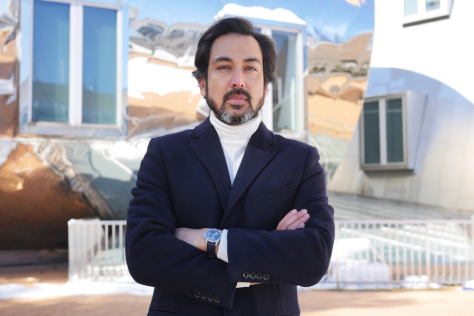
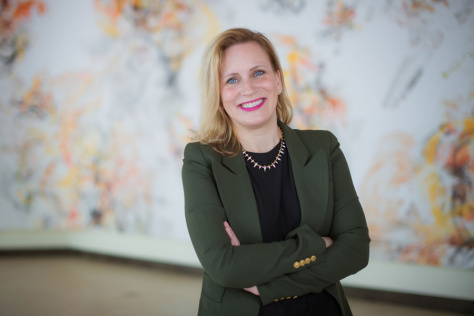
Photo of Tyler Jacks standing in front of a wall of colorful scientific images in the Koch Institute lobby and smiling for the camera.

Tyler Jacks Receives ACS Medal of Honor

American Cancer Society

Congratulations to Koch Institute Founding Director Tyler Jacks, who has been selected to receive the 2026 American Cancer Society Medal of Honor. The organization’s highest honor, this award is given to individuals whose work has fundamentally advanced the fight against cancer. Jacks is recognized for his extraordinary scientific contributions to the field of cancer biology as well as his leadership in shaping new, more effective models for collaborative, patient-centered research at MIT, non-profit Break Through Cancer, and the national level. 

Filter by

Filter by Title/Description

Filter by Topic

Filter by Year

Signal Boost

MIT News

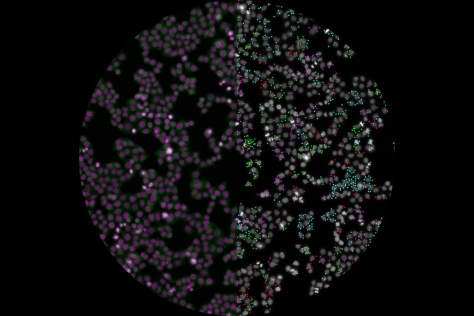
The Strano Lab developed a photonic technique that dramatically improves the signal of fluorescent sensors, potentially enabling their use for cancer diagnosis or monitoring. In a Nature Nanotechnology study funded in part by the Bridge Project, researchers were able to implant sensors as deep as 5.5 cm and still get a strong signal.

Pinpointing Solutions for Cancer Detection

MIT Spectrum

Ovarian cancer is notoriously hard to detect. Lacking in reliable diagnostic or screening techniques and opaque in its biological origins, it is difficult to find or target until it has progressed to dangerously late stages. The Hammond and Irvine Labs, in conjunction with their clinical collaborators and a cohort of patients, are determined to change this.

Drawing on years of expertise in engineering, immunology, and materials chemistry, and on recent funding from the Bridge Project, a multi-disciplinary team of researchers has built a polymer microneedle patch that samples interstitial fluid in the body to screen for microRNAs from cancer cells. The patch, which also has applications for autoimmune diseases, could one day become the first noninvasive screening tool for ovarian cancer.

Ultimate Frisbee

Nature Materials

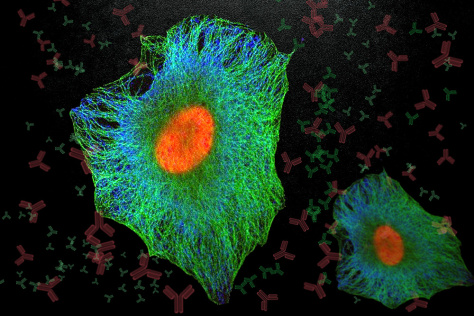
Substantial delivery challenges persist for agents that engage the STING pathway, a highly desirable cancer immunotherapy target. However, new tumor-penetrating lipid nanodiscs developed by the Irvine Lab outperformed previously designed nanoparticles in delivering STING-activating agents to induce tumor rejection and support immune memory against reintroduced tumor cells. This work was published in Nature Materials and supported in part by the Marble Center for Cancer Nanomedicine.

Studying Cancer Across Continents

MIT News

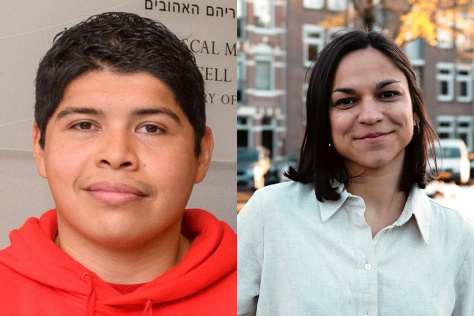
New MIT alum and aspiring MD/PhD student Daniel Zhang is headed to the Netherlands on a Fulbright scholarship. His planned project, developing an organoid co-culture system to study malignant rhabdoid tumors and screen for therapeutic vulnerabilities, builds on his longtime work in the Jacks Lab developing genetic knockout models for colorectal cancer.

Becoming Bob Langer

Becoming X

A new installment of the Bear Grylls Becoming X series features Bob Langer, who shares how he ended up in the chemical engineering field, how he eventually achieved his research goals, and how he’s put them to work in service of millions of people worldwide.
 

With an AI Towards the Clinic

MIT News

Regina Barzilay co-chaired the AI Cures conference for physicians and researchers interested in bringing artificial intelligence tools into the clinic. Fellow KI members Susan Hockfield and Phillip Sharp and Bridge Project collaborator Lecia Sequest were among those who attended the event, which was co-hosted by MIT and Mass General Brigham.
 

A Case for Commendation

MIT News

Congratulations to our newest extramural faculty member, biologist Lindsay Case, on being named a Searle Scholar. This annual award honors 15 outstanding U.S. assistant professors who have high potential for ongoing innovative research contributions in medicine, chemistry, or the biological sciences. Case studies the molecular mechanisms that lead to aberrant cell migration and signaling during cancer metastasis.  

What's Next for RNA Vaccines?

MIT News

KI member Dan Anderson recently co-authored a review in Nature Biotechnology on mRNA therapies. He sat down with MIT News to discuss the history and lessons learned from the development of mRNA vaccines for Covid-19 as well as future directions for the field.
 

Thrown for a Loop

National Science Foundation

Human genomes are folded into loops that control important processes, such as gene expression and DNA repair, and may lead to cancer when misfolded. The Hansen Lab visualized loop formation—for the first time—and discovered that loops are more rare and short-lived than previously thought. The study, published in Science, illuminates the need for new models of how the genome’s 3D structure regulates cellular processes.

Spring Cleaning

MIT News

Manalis Lab researchers have discovered that before cells divide, they take out the molecular trash. In a study appearing in eLife and funded by the MIT Center for Precision Cancer Medicine, the team detected a drop in the dry mass of cancer cells using a technique deploying the Manalis Lab’s signature suspended microchannel resonator. Further experimentation revealed an uptick in lysosomal exocytosis, a process where lysosomes—cell organelles that process cellular waste—jettison their contents. Because exocytosis plays a role in the development of resistance to some chemotherapies, the findings could inform new strategies for making cancer cells more susceptible to treatment.