News

Golden particles join a DNA strand.

Precision gene editing

MIT News

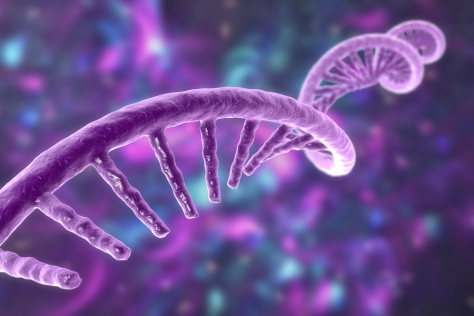
Robert Langer, Phillip Sharp, and research scientist Vikash Chauhan developed an engineered prime editing system, reported in Nature, that reduces unintended DNA changes by up to 60-fold. The new gene editor could make it easier to explore cell biology questions, such as how populations of cancer cells evolve, as well as develop gene therapy treatments for cancer and other diseases.

Filter by

Filter by Title/Description

Filter by Topic

Filter by Year

Self-Assembling Cell Scaffold

MIT News

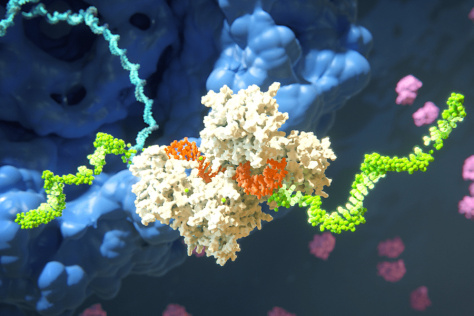
In a Cell Reports study, the Calo Lab shows that a single self-assembling protein acts as a scaffold for a biomolecular condensate that forms part of the nucleolus, a cell organelle. Biomolecular condensates—loosely formed assemblies of molecules—perform many key functions and are linked to disorders such as ALS, Huntingdon’s disease, and cancer.

Belcher Lab Receives Funding for BRCA Research

Gray Foundation

Angela Belcher will lead one of seven teams supported by the Gray Foundation for the study of new approaches for prevention, early detection, and interception of BRCA-related cancers. Other teams selected will be led by Joan Brugge (Harvard Medical School), Dipanjan Chowdhury (Dana-Farber Cancer Institute), Amy Degnim (Mayo Clinic), Shawn Demehri (Massachusetts General Hospital), Judy Garber (Dana-Farber Cancer Institute), and Kenneth Olive (Columbia University). The grants are part of the foundation’s ongoing Team Science program, which funds innovative BRCA-related collaborative research.     The Gray Foundation’s Mindy and Jon Gray commented: “As we double down on our Team Science program, it is our fervent hope that families have far better options than exist today. We are inspired to support this cutting-edge research across institutions as we continue to make progress in early detection, prevention, and interception of BRCA-related cancers.”      

Eye on the STING Pathway

MIT News

The Irvine Lab showed a surprising new role for the immune-regulating protein STING in a study appearing in Science, done in collaboration with the Blainey Lab and the Broad Institute’s Hacohen group. The researchers found that in addition to turning on genes involved in cell defense, the STING protein also acts as an ion channel—mechanisms involved in cell signaling and bioelectrics. This is the first human immune sensor found to translate danger signals into ion flow. The findings could help researchers improve cancer therapies targeting STING, so that they stimulate the immune system to destroy tumors without damaging healthy tissues.

Grant to Bhatia Lab to Advance Nanosensors to Diagnose Pediatric Pneumonia

MIT Koch Institute

Sangeeta Bhatia and her group have received a grant from Open Philanthropy to develop a non-invasive, accessible platform to diagnose pediatric pneumonia in under-resourced areas. Pneumonia is the leading cause of death among children worldwide, accounting for 14% of deaths among those under age five. Although pneumonia can arise from either bacterial or viral infection, reliable methods of diagnosing young children are invasive and expensive, frequently putting timely diagnosis out of reach of patients in low- and middle-income countries. In 2022, the Bhatia Lab demonstrated that their nanosensor diagnostic could reliably and quickly measure different immune responses to viral and bacterial pneumonia in preclinical models. Bhatia and a team of researchers from MIT, Boston University, and Boston Children's Hospital will use the grant to adapt this pneumonia diagnostic for use in the doctor’s office and other points-of-care.

Wearable Ultrasound for Cancer Detection

MIT News

KI alumna and Media Lab professor Canan Dagdeviren has designed a flexible, user-friendly 3D-printed patch that could be incorporated into a bra to enable earlier detection and more frequent monitoring of patients at high risk for breast cancer. She was also named one of three inaugural prize winners by MIT Future Founders Initiative, which promotes female entrepreneurship in biotech.

Paula Hammond Appointed Vice Provost for Faculty

MIT Provost

Institute Professor Paula Hammond will begin her new role as as vice provost for faculty in December 2023. In her new role as vice provost for faculty, Hammond will focus on many aspects of professional development, community, and climate for faculty. She will advocate for faculty development and mentoring, working to complement local recruitment and retention efforts led by the schools and college.

Making Sense of Cell Fate

MIT News

In a study of ovarian and osteosarcoma cancer cells appearing July 19 in Cell SystemsYaffe Lab researchers find that timing and dosage of DNA-damaging drugs are key whether cancer cells die or enter senescence. The study has implications for how a class of cancer drugs called MEK inhibitors are used in combination with chemotherapy.  

Kimberly Bennett Named HHMI Gilliam Fellow

Howard Hughes Medical Institute

Congratulations to KI grad student Kimberly Bennett, one of 50 new HHMI Gilliam Fellows recognized for their outstanding research and their commitment to making science more inclusive. As a Gilliam Fellow, Kimberly will be working with her advisors Paula Hammond and Joelle Straehla to improve the first generation, low-income graduate student experience at MIT.

GI Biosensors Track Inflammatory Markers

MIT News

The Traverso Lab made a wireless “pill” that tracks markers for gastrointestinal inflammation. A Nature study points to a variety of applications for the biosensor, including diagnosis and monitoring for notably inflammatory bowel disease, malnutrition, antibiotic resistance, neurodegenerative diseases, and poor response to chemotherapies and vaccines.

A new vision for ultrasound imaging

MIT News

Nicole Henning was awarded a  2023 MIT Excellence Award for her role in developing ultrasound-guided injection, a technique that can be harnessed to initiate disease for modeling purposes or administer drugs into deep tissues. Previously, delivering these to such hard-to-reach tissues inside the body required invasive surgeries that may affect the results of drug screenings or studies of disease processes. The key advancement of USGI is that it is a minimally invasive technique, combining ultrasound imaging to view the inside of the body to make precisely targeted injections into tissues, for instance into the lungs, liver, or pancreas.