News

Golden particles join a DNA strand.

Precision gene editing

MIT News

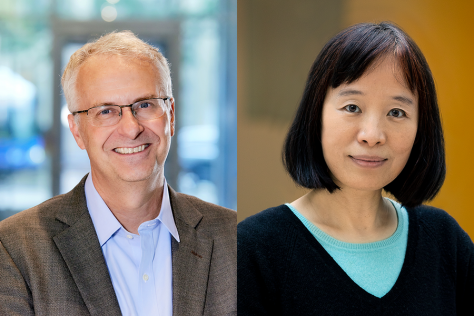
Robert Langer, Phillip Sharp, and research scientist Vikash Chauhan developed an engineered prime editing system, reported in Nature, that reduces unintended DNA changes by up to 60-fold. The new gene editor could make it easier to explore cell biology questions, such as how populations of cancer cells evolve, as well as develop gene therapy treatments for cancer and other diseases.

Filter by

Filter by Title/Description

Filter by Topic

Filter by Year

Anchors Aweigh for Immunotherapy Translation

Business Wire

An approach engineered in the Irvine and Wittrup labs to anchor powerful immune medicines at the tumor site—thus avoiding challenges of both systemic and intratumoral delivery—is headed to trials. Ankyra Therapeutics, which the researchers co-founded, announced approval of its investigational new drug application by the US FDA and clinical trial application by Health Canada for its lead agent, ANK-101. Watch or read more to learn about the original research, supported in part by the Marble Center for Cancer Nanomedicine, the Hope Babette Tang (1983) Student Research Fund, the Kristin R. Pressman and Jessica J. Pourian (2013) Koch Institute Fund, the Charles S. Krakauer (1954) Fund, and a KI Quinquennial Cancer Research Fellowship.
 

How to Succeed at Failing

Freakonomics Podcast

“Was that really failure? Or was it just being an apprentice to trying to learn how to succeed?”  Robert Langer interviews with the Freakonomics podcast in their multipart series, “How to Succeed at Failing.”

Congratulations, Tigist!

Fred Hutch Cancer Center

Congratulations to White Lab postdoc Tigist Tamir on winning one of the Fred Hutch Cancer Center's 2023 Dr. Eddie Méndez Scholar Awards! The award recognizes early-career underrepresented minority scientists and scientists with disabilities.  

KI Trio elected to National Academy of Medicine

MIT News

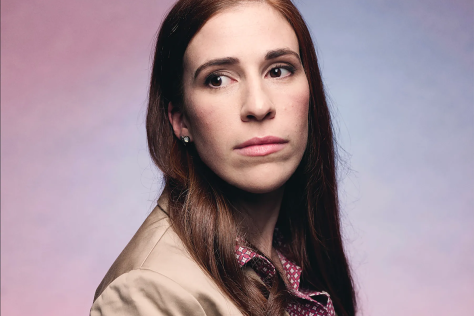
Daniel Anderson, Darrell Irvine and Regina Barzilay have been elected to the National Academy of Medicine! Weinberg Lab alumnus and cancer researcher Siddhartha Mukherjee, whose best-seller Emperor of All Maladies highlighted breakthroughs made by MIT’s cancer research community, was also recognized. Election to the academy is one of the highest honors in the fields of health and medicine, recognizing outstanding professional achievement and commitment to service. Congratulations to all!

Circular RNA Round-Up

Nature

Nature rounds up everything you need to know about circular RNA, including advances from the Anderson Lab and its spinout Orna Therapeutics. By tying ends of RNA together, circular RNA can stick around longer than the linear RNA currently used in vaccines and other therapies.

Moungi Bawendi wins 2023 Nobel Prize in Chemistry

MIT News

Congratulations to Moungi Bawendi, the Lester Wolfe Professor of Chemistry, on winning the 2023 Nobel Prize in Chemistry! Bawendi shares the prize with Louis Brus of Columbia University and Alexei Ekimov of Nanocrystals Technology for pioneering the development of quantum dots. These semiconducting nanocrystals emit exceptionally pure light and have been deployed in computer and television displays and biomedical imaging. Bawendi has collaborated with Koch Institute member Linda Griffith and former administrator W. David Lee ’69 on the Lumicell Imaging System, a low-cost single-cell imaging technology for eliminating residual cancer cells during tumor resection. Supported in its early stages of development by the Koch Institute Frontier Research Program through the Kathy and Curt Marble Cancer Research Fund, the system was pairs an injectable contrast agent with a hand-held, single-cell resolution imager to scan surgical margins for residual cancer cells. The system is now on the fast track to FDA approval, and could help eliminate the need for repeat cancer surgeries, reduce the incidence of relapse, and lower healthcare costs.

Targeting Titans of Transcription

MIT News

A signature technology from Angela Koehler is a low-cost screening tool for studying how transcription factors—proteins that regulate gene expression—interact with each other, and identifying compounds that modulate them. Beyond her lab, the platform contributes to translational work in her startup, Kronos Bio, which is now conducting clinical trials targeting MYC, a transcription factor whose dysregulation helps drive multiple cancers.

Blending Biology and AI

MIT News

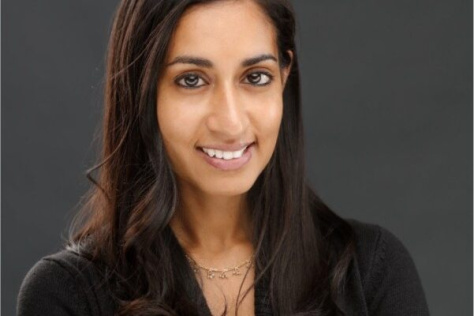
Machine learning, AI and molecular biology come together for Yaffe Lab undergrad Charvi Sharma in Course 6-7, one of four new majors integrating data science with a second field. Sharma sees computer science and medicine dovetail through her work as an undergraduate researcher to understand how signaling pathways contribute to a cell’s ability to escape from cell cycle arrest after DNA damage. The data science and analysis skills she has honed through computer science courses help her understand and interpret the results of her research. She expects those same skills will prove useful in her future career as a physician.

Takara BioView Interviews Yadira Soto-Feliciano

Takara BioView Blog

Yadira Soto-Feliciano talks to Takara BioView, which celebrated National Hispanic Heritage Month with interviews Hispanic scientists who have made significant contributions to our understanding of health and disease. Her advice to young scientists is to embrace their identity, because “it’s bringing something different to the table—particularly in science which has historically been very homogeneous. It’s really important to bring people with accents, people that look different, people with different experiences, because that's where innovation will happen.”

Implantable Insulin Factory

MIT News

An implantable device from the Anderson and Langer Labs carries cells that produce insulin, plus a tiny oxygen-producing factory that keeps the cells healthy. The device, described in PNAS, could help control diabetes without the need for injections.