News

Headshot of Richard Hynes, sitting in front of a bookcase

Remembering Richard Hynes

MIT Koch Institute

With great sadness, the Koch Institute marks the passing of Richard O. Hynes PhD ’71, whose discoveries reshaped modern understandings of how cells interact with each other and their environment, who died January 6, 2026 at age 81.

Filter by

Filter by Title/Description

Filter by Topic

Filter by Year

Dual duty microneedles

Nature Materials

A new Jaklenec lab study published in Nature Materials demonstrates novel microneedle patches that can be applied to the skin to deliver mRNA drugs and store billions of bits of anonymous and reliable information. This technology could be used to enhance healthcare in low resource settings, while addressing critical challenges related to  reliability and privacy of traditional paper and digital database systems for patient information.

Changing the math on drug delivery

MIT Koch Institute

Louis DeRidder, a graduate student in the Langer and Traverso groups, details his journey to a career in biomedical research. Inspired by a childhood medical emergency and a high school shadowing program, he is now a driving force in a Bridge Project team developing CLAUDIA, a closed-loop drug delivery system designed to tailor doses of chemotherapy to individual patients for maximum safety and effectiveness.

Science on the menu

MIT News

MIT hosted its annual “Breakfast with Scientists,” where some of the nation’s most talented high school researchers met with with leading scientific minds, including KI faculty members Amy Keating, Kristen Knouse, and Phillip Sharp. Student delegates were convened in Boston for the American Junior Academy of Science conference, held alongside the American Association for the Advancement of Science annual meeting.

Balancing game for brain cancer treatment

Eureka Alert

A collaborative study creates a detailed picture of immune programs in important brain tumor cells and how their relative expression can predict immunotherapy response and overall survival. The study, published in Nature and supported by the Ludwig Centers of MIT and Harvard, and McGill University, showed that dexamethasone, commonly prescribed to brain cancer patients to reduce swelling, suppresses the immune system for weeks after administration and can inhibit immune activity and immunotherapy response.

Tardi-grade A science

MIT News

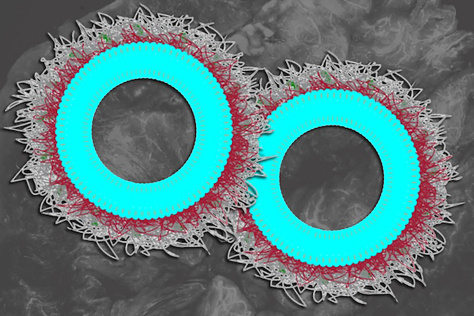
About 60 percent of cancer patients in the U.S. receive radiation therapy, which can have severe side effects. In a study published in Nature Biomedical Engineering, a team led by Giovanni Traverso discovered that a protein from tardigrades (microscopic "water bears") can protect human cells from radiation damage, minimizing treatment side effects.

Solving the puzzle of immune evasion

MIT News

Stefani Spranger’s work is focused on uncovering why some tumors evade the immune system’s attack. For example, her latest research, published in Cancer Immunology Research, reveals that lung cancer cells expressing SOX2 can block CD8+ T cells, undermining checkpoint blockade therapy. “By understanding these resistance mechanisms, we can develop smarter immunotherapies to outmaneuver cancer,” says Spranger.

AI in Action 

Forbes

Assessing promise versus prudence for AI in healthcare, Forbes highlighted Regina Barzilay's research showing AI can reliably improve breast cancer detection rates by 20% without increasing false positives. In a recent interview with Cancer Network, Barzilay discussed how AI’s proven ability to improve cancer detection rates in both breast and lung cancer screening may eventually push for updates to outdated protocols.

Koehler to lead MIT HEALS

MIT Office of the President

Congratulations to Angela Koehler on being named director of the MIT Health and Life Sciences Collaborative (MIT HEALS). MIT HEALS was established last year to bring together researchers from across the Institute to innovate new solutions to urgent challenges in health care. Koehler will be joined by two associate directors: Department of Biology professor Iain Cheeseman and Department of Biological Engineering professor Katharina Ribbeck.

Splice of life

MIT News

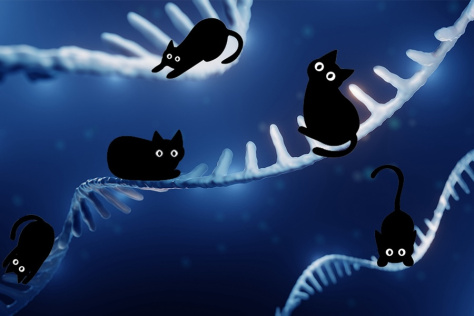
The Burge lab has discovered a new type of control over RNA splicing, a process critical for gene expression. Appearing in a new Nature Communications paper, their study sheds light on how this control mechanism can go wrong—and serve as a potential therapeutic target—in acute myelogenous leukemias and other diseases.

Protein location prediction

MIT News

Inspired by AlphaFold, a groundbreaking tool for predicting protein structure, researchers led by Regina Barzilay and Richard Young developed ProtGPS, a machine learning model that predicts protein location based on the sequence of its amino acid components. In a Science study, the team demonstrated that ProtGPS can also predict how disease-related mutations change protein location as well as generate new protein designs targeted to a desired location.