News

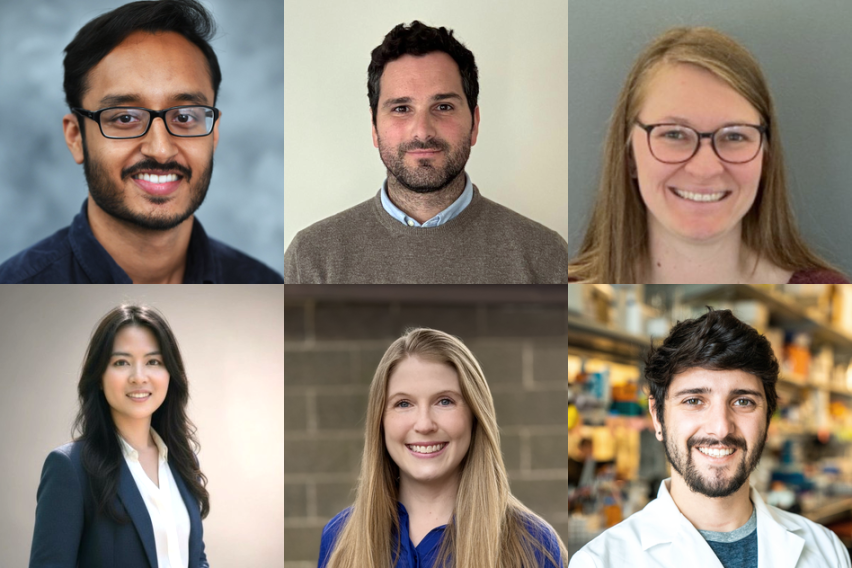
Collage of headshots of six Convergence Scholars

Introducing the 2026 to 2027 Convergence Scholars

MIT Koch Institute

The Koch Institute for Integrative Cancer Research is pleased to announce the 2026-2027 awardees of the Convergence Scholars Program. Please join us in congratulating Azmain Alamgir, Guillermo Arroy Ataz, Manon Bulliard, Tina Huang, Vanessa Kelley, and Brett Pogostin.

Filter by

Filter by Title/Description

Filter by Topic

Filter by Year

Thinking Outside the Dish

Cell Metabolism

Cell metabolism has been called the "Achilles Heel" of cancer, an opportunity to attack tumors as they consume essential nutrients to feed their hyperproliferative nature. However, many of the experiments exploring how cancer cells metabolize these nutrients are conducted in plastic dishes, several steps removed from an in vivo environment.

To more faithfully model these processes, researchers in the KI's Vander Heiden lab infused tumor-bearing mice with isotope-labeled glucose and glutamine (two important molecules for fueling cancer cell replication and proliferation) and compared their fates in both tumor and normal tissue. In both situations, glucose was converted to lactate at an expectedly elevated rate (cancerous cells are commonly observed to increase lactate production) but the cells' utilization of glutamine did not increase, a starkly different result than that observed in analogous experiments performed in tissue culture.

The conclusion that in vitro results cannot be applied uniformly to in vivo environments is not unexpected, but it is indicative of the importance of understanding the context in which metabolic processes occur. Using in vivo metabolic tracking presents an exciting opportunity for probing the metabolic properties of multiple tumor types in vivo, and can lead to novel insights into the biology of human cancers. Mouse models that faithfully recapitulate human cancers will be critical for identifying tumors' vulnerabilities within a given tissue and give researchers a "heel" up on designing therapies that target cancer metabolism

A New Release on Life

MIT News

Nanoparticles are becoming an attractive option for targeted cancer therapy, but do these new delivery methods interfere with their cargo's functions? The Hemann Lab teamed up with the MIT Department of Chemistry’s Johnson Lab to measure cell response to their previously developed high capacity nanoparticles. 

On the Origin of Mutations

Science

You can take the tumor out of the tissue, but you can’t take the tissue out of the tumor. In a paper published in Science, the KI’s Vander Heiden Lab presents strong evidence that activation and suppression of cancer-causing genes can have wildly different results in cell metabolism depending on the tumor’s tissue of origin.

To prove that tissue of origin influences tumor behavior, researchers utilized models of both pancreatic ductal adenocarcinoma (PDAC) and non-small cell lung carcinoma (NSCLC) with identical genetic mutations. They found that despite having the same initiating events, the resulting cancer cells used branched-chain amino acids (BCAAs) differently as they proliferated. Their results showed that the NSCLC tumors used free-flowing BCAAs to supply the tumor with essential growth nutrients, while the PDAC tumors decreased their use of these free BCAAs. Indeed, blocking metabolism of these BCAAs inhibited the formation of NSCLC but not PDAC tumors. As such, they concluded that therapies designed to impair tumor growth by suppressing enzymes needed for BCAA use would be most effective in NSCLC and that a different treatment plan would be required to slow the growth of PDAC tumors.

The Vander Heiden Lab’s findings suggest a shifting paradigm for personalized medicine, in which context plays as critical a role as the genetic drivers. In other words, those who seek to exploit the pathways that cancer cells employ to survive ought to consider not just how the journey begins, but also where.

A Hard Day’s Night for Tumorigenesis

MIT News

The KI's Jacks Lab wants to Let It Be known that two of the genes that control cells’ light/dark regulation are also tumor suppressors. Their experiments, conducted with Help! from a genetically engineered mouse model of non-small cell lung cancer, explore the effects of both night shift work and jet lag on tumor development and offer Something New in the search for exploitable drug targets as researchers work around the clock to fight cancer.

Biomedicine for the Convergent Soul

MIT Koch Institute

A new MIT report sounds the battle cry for increased collaboration and funding of integrative research bringing together physical and life sciences. Co-chaired by KI members Tyler Jacks, KI director and the David H. Koch Professor of Biology; Susan Hockfield, president emerita of MIT; and Phillip Sharp, Institute Professor, the report builds on a 2011 white paper and cites numerous examples of ground-breaking cross-disciplinary research. The report was formally presented at last month’s Convergence Forum at the National Academies of Sciences, Engineering, and Medicine (watch presentations). 

Do Viruses Make You Feel Funny?

You're the Expert

What exactly does KI faculty member Angela Belcher do all day? This was the challenge presented to three comedians on a recent “You’re the Expert” podcast, which brings together academic experts and sharp-witted humorists for a deep, humorous dive into the inner workings of top research laboratories. Listen, laugh, and learn about Belcher’s work engineering viruses and bacteria to create new technologies.

Keeping Up with the Koehlers

The Secret Life of Scientists

As a chemist with an appointment in MIT's Department of Biological Engineering, KI faculty member Angela Koehler is no stranger to the challenges of navigating multiple worlds at once. On The Secret Life of Scientists, Koehler dives into cancer drug discovery, mentorship, and how she and her husband, fellow academic and former KI postdoc Arturo Vegas, balance life in the lab with parenting three under three.

Pearls Before STEM

Cell Press

“If you’re wearing pearls today,” KI faculty member Angela Belcher told the crowd assembled at the KI for “The Science of Gender and the Gender of Science", “you’re wearing a biocomposite nanomaterial.” Belcher and fellow KI faculty member Angela Koehler presented their work and professional experiences as part of Cell Press’s LabLinks event on May 19. The day’s lecture and discussion sessions, which began with a welcome and call to action by KI Executive Director Anne Deconinck, ranged from protein engineering, endocrinology, and reproduction to lab culture, and the pay gap, and did not shy away from difficult questions affecting women and men alike. The event was co-hosted by the Association for Women in Science. Learn more about the motivation behind this meeting and explore contributions by KI members and meeting participants to Cell Metabolism's Rosie Project (subscription required).

Tumors Behaving Badly

MIT Spectrum

It takes a village to raise a child, but what about shape-shifting tumors? Can they be corralled into submission? KI faculty members Douglas Lauffenburger and Michael Hemann are teaming up to create detailed profiles of tumor behavior, including their variable responsiveness to treatment, with an eye toward overcoming drug resistance and transforming tumor development models. Their approach may just be the discipline the field is calling for!

TED Live and Learn

MIT Koch Institute

KI engineers Paula Hammond, a David H. Koch Professor of Engineering, and Sangeeta Bhatia, the John J. and Dorothy Wilson Professor of Health Sciences and Technology & Electrical Engineering and Computer Science, made their Broadway debuts at TED Talks Live, in partnership with PBS. Hammond unveiled “a new superweapon in the fight against cancer” (watch now) while Bhatia explored how a “tiny particle could roam your body to find tumors” (watch now). Both presentations were offered as part of the two-day Science & Wonder series within the weeklong event and preceded Bhatia’s appearance at TEDMED, during which she spoke further about her vision for miniaturization of biomedical inventions (watch now).