News

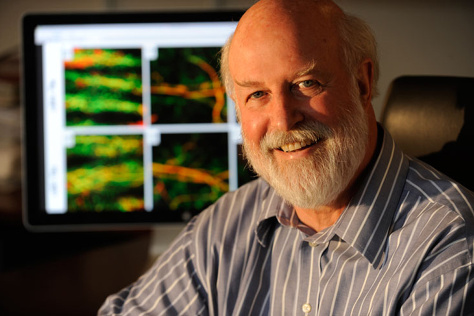
Photo of Tyler Jacks standing in front of a wall of colorful scientific images in the Koch Institute lobby and smiling for the camera.

Tyler Jacks Receives ACS Medal of Honor

American Cancer Society

Congratulations to Koch Institute Founding Director Tyler Jacks, who has been selected to receive the 2026 American Cancer Society Medal of Honor. The organization’s highest honor, this award is given to individuals whose work has fundamentally advanced the fight against cancer. Jacks is recognized for his extraordinary scientific contributions to the field of cancer biology as well as his leadership in shaping new, more effective models for collaborative, patient-centered research at MIT, non-profit Break Through Cancer, and the national level. 

Filter by

Filter by Title/Description

Filter by Topic

Filter by Year

Yaffe Lab Backs Cancer into a Corner

MIT News

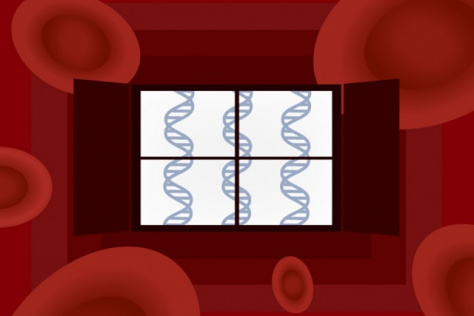
Researchers in the laboratory of KI faculty member Michael Yaffe have discovered a drug-resistance mechanism in tumor cells: a backup system that takes over when p53 is disabled. By targeting this backup system, these tumors could be made much more susceptible to chemotherapy.

Bugging Cancer

MIT News

While biopsies of cancerous tissue can provide insight into an appropriate course of treatment, cancer can evolve, develop resistance to therapies, and find new pathways for growth. Now, researchers in the laboratory of KI faculty member and David H. Koch Professor of Engineering Michael Cima have developed an implantable device, small enough to fit inside a biopsy needle, allowing doctors to monitor cancer in real time. The device wirelessly transmits biomarker data, allowing clinicians to easily and inexpensively receive critical feedback on whether a treatment is working or needs adjusting. Cima’s device was covered extensively in the press, including in Boston Magazine and on Boston.com.

Freshly Squeezed Vaccines

MIT News

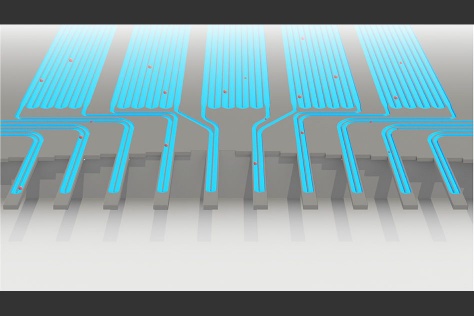
KI researchers have shown that they can use a microfluidic cell-squeezing device to introduce specific antigens inside the immune system’s B cells, providing a new approach to developing and implementing antigen-presenting cell vaccines. Through CellSqueeze, the device platform originally developed at MIT, the researchers pass a suspension of B cells and target antigen through tiny, parallel channels etched on a chip. A positive-pressure system moves the suspension through these channels, which gradually narrow, applying a gentle pressure to the B cells. This “squeeze” opens small, temporary holes in their membranes, allowing the target antigen to enter by diffusion.

From Body to Bedside

MIT News

KI researchers in the laboratories of David H. Koch Institute Professor Robert Langer and David H. Koch Professor of Engineering Michael Cima have developed an implantable device that could allow doctors to test drugs in patients before prescribing chemotherapy. When implanted in a tumor, this tiny device diffuses small doses of up to 30 different drugs — or combinations thereof — in surrounding tumor cells. After one day, the implant and a small biopsy of surrounding tissue are removed, allowing researchers to study and rank the efficacy of drugs. This research was featured extensively in the news, including in New ScientistThe Scientist, and The Boston Herald. This device is now an integral part of multiple translational projects, including a Bridge Project collaboration between David H. Koch Professor of Biology Michael Yaffe and colleagues at Dana-Farber/Harvard Cancer Center to test combination drug therapies for advanced prostate cancer.

Open Data Opens Minds

MIT News

As access to data about his brain ultimately led to the detection and removal of a baseball-sized tumor last August, Steven Keating knows firsthand how powerful health data can be. Keating, an MIT graduate student, has open sourced much of his own health data on his personal website with the hope that it may help researchers and patients better understand cancer. His inspiring story, which blends equal parts curiosity and positivity, has been shared in MIT NewsThe New York Times, and BetaBoston, and he has given several talks on campus, including two at the KI.

Robert Langer wins the Queen Elizabeth Prize for Engineering

MIT News

KI faculty member Robert Langer, the David H. Koch Institute Professor, has been named the winner of the 2015 Queen Elizabeth Prize for Engineering (QEPrize). As there is no Nobel Prize for engineering, the QEPrize was launched in 2011 to fill this void while raising the public profile of engineering and inspiring young people to become engineers. Langer is receiving the prize for his revolutionary advances and leadership in engineering at the interface with chemistry and medicine. In particular, this recognition comes for being the first person to engineer polymers to enable the controlled release of large molecular weight drugs in the treatment of cancer and other diseases.  He will receive the prize from Queen Elizabeth II at Buckingham Palace later this year.

In Fond Remembrance

MIT News

The KI community mourns the loss of Herman Eisen, a professor emeritus of biology and founding faculty member of the MIT Center for Cancer Research (CCR), who died Nov. 2 at age 96. Over a 70-year career, Eisen forged a path as a pioneering immunologist whose research has significantly shaped the field. He joined the MIT faculty in 1973, having been recruited by CCR founder Salvador Luria. Eisen retired from MIT in 1989, albeit only in the official sense: As a professor emeritus, he maintained an active laboratory and continued to advise students and postdocs, research, and publish until his very last day. “Herman was a true treasure: an inspiring colleague, a caring mentor, and a wonderful human being,” says Tyler Jacks, director of the Koch Institute and David H. Koch Professor of Biology. “We all aspire to be Herman Eisen.”

Life Lessons from 34 Years of Fighting Cancer

TEDx Cambridge

Just like in life, there are no turn-by-turn directions when it comes to cancer research.  At TEDxCambridge, Koch Institute Director Tyler Jacks shared insights from his 34 years in the "maze" of cancer research.

The Inside Story: Implantable Technology Improves Treatment

MIT Koch Institute

Working on implantable devices for drug delivery, KI member Michael Cima, David H. Koch Professor of Engineering, hopes to make cancer treatments safer, more effective, and more convenient. As these implantable devices advance toward the clinic, so does the promise for improving patient outcomes and experiences. 

RNA Combination Therapy for Lung Cancer Offers Promise for Personalized Medicine

MIT News

Researchers in the Jacks, Anderson, and Langer Labs report in the Proceedings of the National Academy of Sciences that they have successfully delivered nanoparticles carrying small RNA therapies in a clinically relevant mouse model of lung cancer to shrink tumors and slow their growth. They found that their nanoparticle treatment extended life just as well as a standard-care chemotherapy drug, and furthermore, that the combination therapy of the nanoparticles and the drug together prolonged life by about an additional 25 percent. “Small-RNA therapy holds great promise for cancer,” Jacks says. “It is widely appreciated that the major hurdle in this field is efficient delivery to solid tumors outside of the liver, and this work goes a long way in showing that this is achievable.”