News

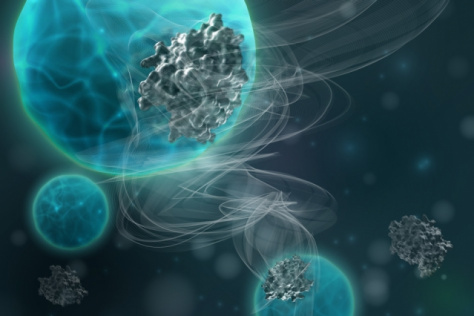
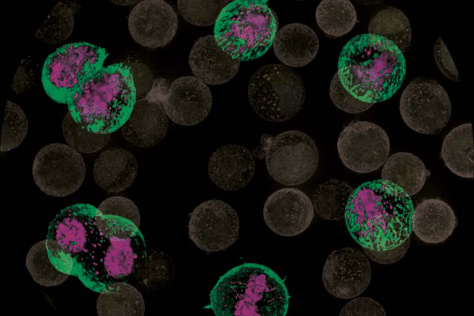
Two tumor cells, one with forcefield. two blue spheres with green and purple spheres on them

Kinase Closed: Shutting Down Cancer's Escape Routes

MIT News

Forest White and Cameron Flower PhD ’24 have uncovered why drugs that inhibit tyrosine kinase signaling pathways, such as imatinib (Gleevec), fail in some patients.  By analyzing tumor phosphoproteomics, the White Lab team found that many resistant cells are intrinsically wired to resist tyrosine kinase inhibitors: backup signaling networks are already running to support vital functions such as cell growth and division, even when tyrosine kinase inhibitors work as intended. 

As reported in Proceedings of the National Academy of Sciences, researchers overcame this resistance in cell models by pairing a tyrosine kinase inhibitor with a drug that targets the backup pathway—an approach currently in clinical trials for lung cancer. 

“We are really excited to watch these clinical trials and to see how well patients do on these combinations. And I really think there’s a future for using tyrosine phosphoproteomics to guide this clinical decision-making,” White says. The research was funded in part by the MIT Center for Precision Cancer Medicine.
 

Filter by

Filter by Title/Description

Filter by Topic

Filter by Year

New Model for Neuroblastoma

Whitehead Institute

The laboratories of Rudolf Jaenisch and Stefani Spranger, the Howard S. (1953) and Linda B. Stern Career Development Professor, have developed a mouse to study tumor development and immune response in neuroblastoma, a rare form of childhood cancer that has proven difficult to study in animal models. The mice, described in a study appearing in Cell Stem Cell, were modified to include human cells in parts of the nervous system. 

Deep Learning at IAP

MIT News

Bhatia Lab grad student Ava Soleimany is helping to spread machine-learning tools into research labs across MIT with IAP course 6.S191 Introduction to Deep Learning. Co-designed and taught with Alexander Amini, her class begins with machine learning basics and culminates with students making real-world applications of their own. The pair were inspired to create the course through their own experiences using machine learning in research—Soleimany develops nanosensors for the early detection of lung cancer (supported by the Koch Institute Frontier Research Program via Upstage Lung Cancer).

Amon Wins 2020 HFSP Nakasone Award

Human Frontier Science Program

Congratulations to Angelika Amon, the Kathleen and Curtis Marble Professor of Cancer Research, on receiving the 2020 HFSP Nakasone Award! The award, given by the Human Frontier Science Program, honors scientists who have made important breakthroughs in the life sciences. This year's award is given in recognition of Amon's “discovery of aneuploidy-induced cellular changes and their contribution to tumorigenesis, which paved the way for exploiting aneuploidy as a therapeutic target in cancer treatment.” 

Niche Interest

Cancer Research

The Hynes Lab sheds light on how metastatic tumor cells adapt to survive in different locations. Analysis of the extracellular matrix (ECM) surrounding breast cancer metastases, published in Cancer Research, revealed that tumor and local cells each contribute different proteins to create ECM niches that vary from organ to organ.

Personalized Medicine and Medleys

MIT News

Meet Swarna Jeewajee, MIT senior, soprano, and aspiring physician-scientist. She balances her work in the Hemann Lab researching therapeutic vulnerabilities in near-haploid leukemia with her a capella group Singing for Service, which performs in nursing homes and rehabilitation centers throughout the Boston area. Her passion for patient-centered medicine is informed both by her experiences as an MIT student and by her own medical history, growing up in Mauritius with a poorly understood hearing loss and a transformative surgery to correct it in 2018.

Battling Bias in Boston Biotech

Washington Post

A survey of seven MIT science and engineering departments quantifies how many biotech startups have been lost to gender bias: 40. The study, which compared the relative proportion of female faculty members (22%) to woman-founded companies (10%), got its start at the 2018 Xconomy Prize gala. Nancy Hopkins—no stranger to measuring gender bias—told the story of a woman in venture capital who carried a list of 100 VC-funded Boston biotechs, 99 of which were founded by men. Hopkins’s KI colleagues Sangeeta Bhatia, entrepreneur and founder of Glympse Bio, and MIT President Emerita Susan Hockfield heard the speech and joined with Hopkins to brainstorm strategies for addressing this imbalance. Their conversation grew into the Boston Biotech Working Group, which carried out the survey and is spearheading several programs to boost the number of women biotech founders. 

Syros Begins CDK7 Inhibitor Trial

Syros

Syros Pharmaceuticals, co-founded by Bridge Project collaborators Richard Young and Nathanael Gray, has launched a Phase 1 trial of SY-5609. Potent and highly selective, the drug has broad applicability across a range of cancers, including resistant and hard-to treat tumors. It targets the CDK7 gene to combat increased oncogene expression and uncontrolled cell cycle progression.

Trip the Light Fan-gastric

MIT News

The Langer and Traverso Labs developed a light-sensitive hydrogel for gastrointestinal devices. Devices made with the gel break down when triggered by an ingestible LED, eliminating the need for surgical removal. The work, published in Science Advances, has numerous applications for long-term drug delivery, monitoring, and sensing.

Hojun Li Joins the KI

MIT Koch Institute

Welcome to Hojun Li, MD, PhD, the KI’s new Charles W. and Jennifer C. Johnson Clinical Investigator. A pediatric oncologist at Dana-Farber/Boston Children’s Hospital, he recently received a 2020 Scholar Award from the American Society of Hematology.

Dr. Li studies normal and pathologic hematopoietic stem cell development, conditions that predispose children and adults to leukemia, and novel treatments to prevent blood cancers in these patients.   

A Perfect 10 for 2020

MIT Koch Institute

The Koch Institute is ringing in the New Year with a 10/10—again! For more than a year, the Koch Institute community has been working on the renewal process for our Cancer Center Support Grant from the National Cancer Institute. Since MIT’s then-nascent Center for Cancer Research was distinguished as an NCI-designated Cancer Center in 1974, the grant has been recompeted every five years, requiring an extensive written application (more than 1,000 pages!) and an intense site visit. Given the vulnerability of federal research funding, there are no guarantees of success. Yet not only has the Koch Institute’s grant been formally approved for renewal, but it was given a perfect score of 10. We received the same score at our last recompete, in 2014. Join us in raising a glass to our faculty members, trainees, technicians, and staff who worked so hard to put the grant together and to defend it during the site visit!