News

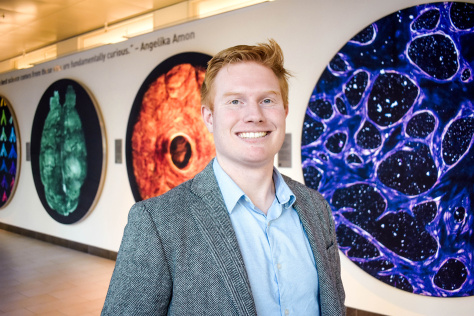
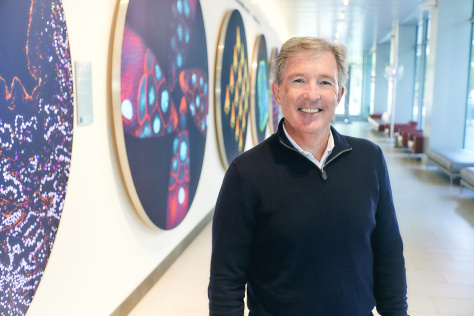
Photo of Tyler Jacks standing in front of a wall of colorful scientific images in the Koch Institute lobby and smiling for the camera.

Tyler Jacks Receives ACS Medal of Honor

American Cancer Society

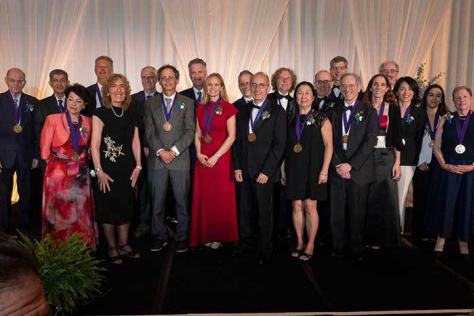
Congratulations to Koch Institute Founding Director Tyler Jacks, who has been selected to receive the 2026 American Cancer Society Medal of Honor. The organization’s highest honor, this award is given to individuals whose work has fundamentally advanced the fight against cancer. Jacks is recognized for his extraordinary scientific contributions to the field of cancer biology as well as his leadership in shaping new, more effective models for collaborative, patient-centered research at MIT, non-profit Break Through Cancer, and the national level. 

Filter by

Filter by Title/Description

Filter by Topic

Filter by Year

Dial M for Modulation

MIT News

The Galloway Lab has developed DIAL, a platform that lets researchers fine-tune the expression of synthetic genes even after they have been delivered to the target cells. The research, published in Nature Biotechnology, allows for uniform, stable control of gene expression and could be used to precisely tailor gene therapies to individual patients or cell populations.

The Magic of Engineering

ACS Nanomedicine

Robert Langer chats with ACS Nanomedicine about his “imperative to push medicine into new frontiers,” touching on moments when the translation of lab discoveries into technological innovations is accelerated. He also shares a few tricks of the trade for maintaining a successful lab—and reveals that he may have a few literal tricks up his sleeve (see 21:50).  

Yes I can, can, CAN

Science Translational Medicine

Researchers from the White and Cima Labs and the Robert A. Swanson (1969) Biotechnology Center demonstrate in patients that serial sampling of glioblastoma is possible. The approach, described in a Science Translational Medicine paper offers an alternative to MRI for treatment response evaluation and a new way to gain insight into tumor progression and therapeutic opportunities.  

A Better, Faster, Cheaper CAR

MIT News

The Chen Lab is developing CAR NK-cells, a cancer immunotherapy approach already in clinical trials that offers notable benefits over approved CAR T-cell treatments. Their newly published study, which appears in Nature Communications, identifies genetic modifications that can make CAR NK-cells more effective, less prone to rejection or side effects, and simpler to produce.  The streamlined, one-step engineering innovation could enable development of off-the-shelf therapies that can be given to patients at diagnosis, several weeks sooner than traditionally engineered CAR NK- or CAR T-cells. The Chen lab and their clinical collaborators hope to run a patient trial of this new approach.

This research was funded in part by the Koch Institute Frontier Research Program through the Kathy and Curt Marble Cancer Research Fund and the Elisa Rah (2004, 2006) Memorial Fund

Out of This World: Breast Cancer Detection Goes to Space 

Good Good Good News

Cima Lab alum Canan Dagdeviren launched a breast-cancer–detecting bra into space aboard Blue Origin's all-female crew in April 2025. This wearable ultrasound patch enables early detection of breast cancer. In microgravity, “10 years of tumor growth can occur in 10 days,” allowing scientists to fast-track breakthroughs in early detection back on Earth.  

Sanghyun Park Selected as 2025 Collegiate Inventors Competition Finalist

National Inventors Hall of Fame

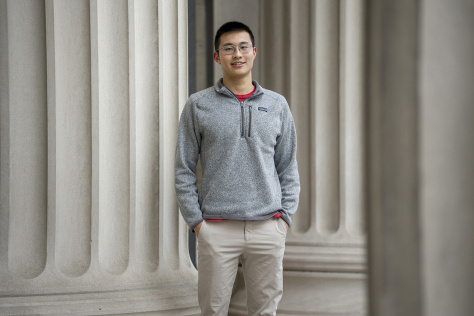
Congratulations to Traverso Lab PhD student Sanghyun Park on being selected as a finalist in the 2025 Collegiate Inventors Competition! This competition is organized by the National Inventors Hall of Fame. 

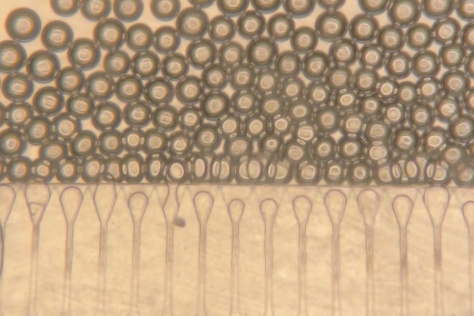
Park was nominated for his project Self-Aggregating Long-Acting Injectable Microcrystals (SLIM) —a formulation designed to enable long-lasting injectable therapies by forming drug microcrystals that self-aggregate after injection. This innovative work was also recognized with a 2024 KI Image Award.

Watch the video of his research      

From Dormant to Dangerous

MIT News

New Weinberg lab research, published in PNAS, reveals how cancer cells reawaken from dormancy. They showed this mechanism is sparked by inflammation in surrounding tissue, then driven by M2 macrophages that secrete EGFR ligands signaling dormant cancer cells to rapidly multiply. Moreover, cells develop ‘awakening memory,’ no longer requiring inflammatory signals to stay active. Understanding these mechanisms could enable more effective strategies against metastatic cancer. This work was supported in part by the MIT Stem Cell Initiative.

Biogen Expansion Signals Optimism for Kendall Square

MIT News

Biogen, co-founded in 1978 by the Koch Institute's Phillip Sharp and Harvard's Wally Gilbert, broke ground on its new Kendall Square headquarters in September. The 580,000-square-foot complex, expected to open in 2028, reflects optimism for Cambridge’s future as a global biotech hub and a continued engine for innovation.

Precision gene editing

MIT News

Robert Langer, Phillip Sharp, and research scientist Vikash Chauhan developed an engineered prime editing system, reported in Nature, that reduces unintended DNA changes by up to 60-fold. The new gene editor could make it easier to explore cell biology questions, such as how populations of cancer cells evolve, as well as develop gene therapy treatments for cancer and other diseases.

FDA approves bladder cancer drug delivery device

MIT News

The FDA approved Johnson & Johnson's INLEXZO™ (gemcitabine intravesical system), a bladder cancer treatment system that originated in the lab of Michael Cima. Developed in the thesis work of KI alum Heejin Lee as well as at KI spinout TARIS Biomedical, the pretzel-shaped device is made of a special alloy with "shape memory," which folds in the bladder after insertion, delivering drugs over slowly over three weeks, to be repeated at the physician's discretion.  This approach offers safer and more effective treatment for one of the most expensive cancers, marked by high recurrence rates. In one study, 82% of patients treated with the system showed no evidence of cancer, with more than half remaining cancer-free nine months later.