News

Black and white photo of a bearded man in very 70s apparel standing in front of a banner with "David Baltimore" and the mirror image text'

Remembering David Baltimore

MIT Koch Institute

With sadness, the Koch Institute marks the passing of Professor David Baltimore. A founding faculty member and formative influence behind the MIT Center for Cancer Research, he was not only a ground-breaking researcher but also a compelling and thoughtful voice for science. 

His discovery of reverse transcriptase changed the prevailing scientific dogma, earned him a 1975 Nobel Prize, and directly enables work in life sciences and biomedical laboratories everywhere. His decades-long advocacy work impacted national policy debates on topics such as recombinant DNA research, the AIDS epidemic, and genome editing.

Filter by

Filter by Title/Description

Filter by Topic

Filter by Year

Bonjour, Live μ

MIT Biology

Live μ, the first instrument of its kind in the U.S., has landed in the Peterson (1957) Nanotechnology Materials Facility at the Koch Institute. The French-manufactured high-pressured freezer allows scientists to execute a cutting-edge strategy called correlative light electron microscopy (CLEM), where fluorescent light microscopy and electron microscopy images are taken of the same sample. The Live μ, along with the Peterson Facility’s growing suite of resources and workflows, is available to the MIT community.

Foretelling Lung Cancer Risk with AI

MIT News

Sybil—a new AI tool developed by KI member Regina Barzilay and Massachusetts General Hospital clinical collaborators Lecia Sequist and Florian Fintelmann—assesses a patient’s risk of lung cancer over six years by analyzing a single low-dose CT scan.

Unlike current methods, Sybil can make accurate predictions without using demographic or medical information or a radiologist’s annotation. The tool, described in the Journal of Clinical Oncology and profiled in The Washington Post, could be used to identify individuals who need additional testing and closer management and could be particularly useful given the rising incidence of lung cancer among non-smokers. MGH is launching a trial of Sybil, and researchers plan additional testing to ensure that it will maintain its accuracy across diverse populations.

Barzilay and Sequist will share project updates as part of SOLUTIONS with/in/sight: Algorithm & Views on May 4. The work is funded in part by the Bridge Project.  

Committed to Caring

MIT News

MIT’s Office of Graduate Education posthumously recognizes KI member Angelika Amon as “Committed to Caring,” citing her generous and dynamic mentorship and her enduring support of students in and beyond the classroom. Amon’s legacy is further exemplified by the Amon Young Scientist Award. She is one of 15 faculty members in the current cohort of honorees, which includes KI member Michael Birnbaum, who was profiled in December.  

It Takes All Kinases

MIT News

Michael Yaffe, together with longtime collaborators Lew Cantley and Benjamin Turk, created an atlas of protein kinases—signaling molecules that regulate nearly all cellular functions. This resource, described in Nature, could accelerate the pursuit of new cancer drugs and help physicians customize treatment to specific tumors.
 

Kronos in Collaboration

Kronos Bio

Kronos Bio, co-founded by Angela Koehler to tackle “undruggable” cancer targets, has launched a collaboration with Genentech. Genentech will leverage Kronos Bio’s drug discovery platform—including its small molecule microarray—to identify compounds that modify difficult-to-target transcription factors, with the aim of developing more effective treatments for cancer patients.

Celebrating Together (Again)

MIT Koch Institute

In late 2022, an in-person celebration of the recipients of the Peter Karches Mentorship Prize took place for the first time in three years, bringing together multiple cohorts of winners with family members and friends of Peter Karches to recognize their contributions. The 2022 awardees were Stephanie Gaglione, Sofia Hu, Allen Jiang, and Chris Nabel.

Suono Doses First Patient

Medical Device Network

Langer/Traverso Lab startup Suono Bio has dosed its first patient with SuonoCalm, an ultrasound-based platform that enhances the delivery of nucleic acids, biologics, and other drugs that are too large or delicate to be absorbed effectively by the gastrointestinal tract. Clinical testing begins with a drug for ulcerative colitis (a known cancer risk factor) and could expand to additional diseases, including cancer.
 

Fascination of Science at the KI

MIT News

The Koch Institute is delighted to host Fascination of Science, an exhibition by renowned German portrait photographer Herlinde Koelbl. Having interviewed dozens of top scientists from around the world, Koelbl has captured the essence of their inspiration and pursuits of knowledge. View selected portraits, including those of KI members Sangeeta Bhatia, Ed Boyden, Robert Langer, and Robert Weinberg, in the Koch Institute Public Galleries through the end of January 2023. The installation was produced by the German Consulate General Boston. 

Thanks for the Cellular Memories

MIT News

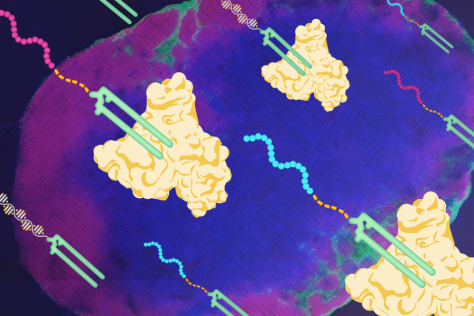
Boyden Lab researchers programmed cells to produce protein chains that record the timing of gene and pathway activation during cellular events. The chains, described in in Nature Biotechnology, can be imaged through light microscopy. The technique could illuminate various cellular functions, including cancer-relevant processes like therapeutic response and gene expression. 

Celebrating Young Scientists

MIT Koch Institute

On Nov. 17, the Koch Institute for Integrative Cancer Research hosted the inaugural winners of the Angelika Amon Young Scientist Award, Alejandro Aguilera Castrejón and Melanie de Almeida, both recognized for their passion for fundamental biology and discovery science.