

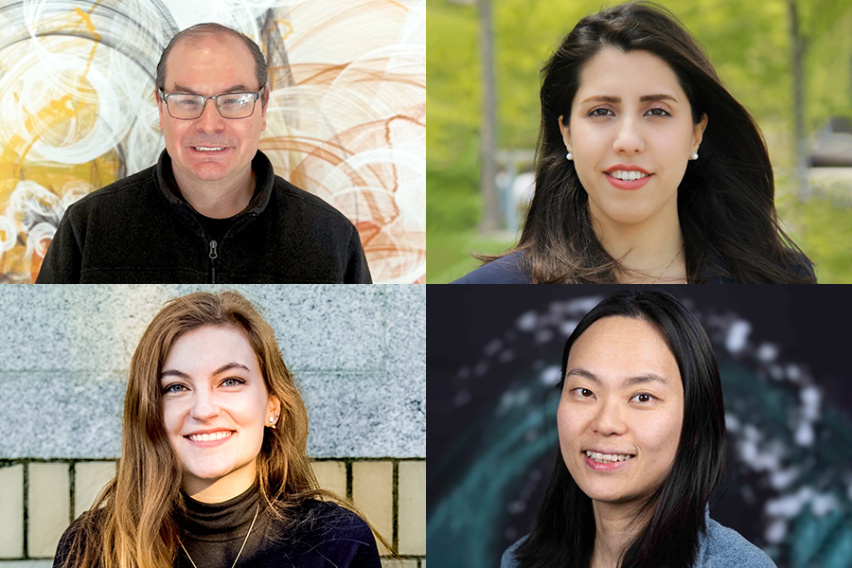
Top left, clockwise: Keith Eidell, Behnaz Eshaghi, Heaji Shin, and Grace Wolczanski
MIT Koch Institute
November 13, 2026
Congratulations to the 2026 Peter Karches Mentorship Prize winners: Keith Eidell, Behnaz Eshaghi, Heaji Shin, and Grace Wolczanski.
The Peter Karches Mentorship Prize is awarded annually to up to four Koch Institute postdocs, graduate students or research technicians who demonstrate exemplary mentorship of undergraduate researchers or high school students in their labs. The prize allows the Koch Institute community to celebrate and recognize the critical role that mentors play, both personally and professionally, in the early stages of a scientist’s career.
Keith Eidell is a postdoctoral fellow in the Hemann lab working to better understand how cancer cells evade and generate resistance to therapeutic cytotoxic CAR-T cell immunotherapy. Major focus areas of his research include target cancer antigen dynamics at the cellular level upon cell interaction between cancer cells and CAR-T cells. Further, Eidell is exploring tissue specific areas of cancer cell resistance and the contributing microenvironment factors that facilitate resistance. His research additionally extends to future implications of cell-based therapies.
Behnaz Eshaghi is a research scientist in the Jaklenec and Langer Labs designing and engineering vaccine delivery platforms to address major barriers to vaccine efficacy and global accessibility. Her research focuses on inducing intestinal mucosal immunity through injectable vaccines, defining how lipid chemistry governs mRNA vaccine stability and biological activity, and controlling antigen exposure kinetics to shape HIV vaccine immune responses. These efforts aim to strengthen protection at mucosal sites, reduce reliance on refrigerated vaccine storage, and enable vaccination strategies that require fewer booster injections.
Heaji Shin is a research scientist in the Yilmaz lab studying how nutritional cues regulate stem cell behavior and tissue homeostasis using the mammalian intestine as a model. Her research focuses on dissecting the role of lysosomes in orchestrating the intestinal stem cell fasting response, uncovering cell-type-specific metabolic pathways, and investigating how lysosomal biogenesis drives stem cell regeneration. These efforts aim to elucidate the molecular crosstalk between organelles during metabolic adaptation and identify novel targets for regenerative medicine.
Grace Wolczanski is a PhD candidate in the Spranger lab focusing on understanding how chemotherapy treatment affects the immune response to ovarian cancer. Specifically, she is interested in how suppressive myeloid populations protect tumor lesions after chemotherapy and potentially lead to disease recurrence.