
MIT Koch Institute
August 12, 2026
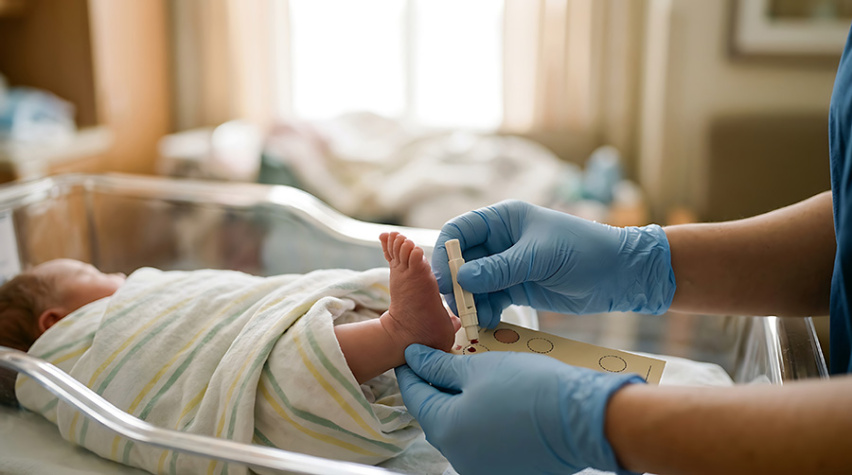
Nearly all newborns in the US are routinely screened via tiny blood draw, or ‘heel stick,’ for a set of health conditions, yet such broad efforts to identify babies at risk for early-onset cancers has not been evaluated. Published in Nature Communications, a Bridge Project study from Koch Institute investigator David Housman and collaborators helps address this gap.
The Bridge team linked data from the Michigan Cancer Surveillance and Newborn Screening Programs to identify all children born in Michigan between 1987 and 2020 who developed a solid malignancy by age eight. Then, they performed targeted sequencing of 11 established cancer predisposition genes using archived newborn dried blood spot DNA from 1,948 children identified.
Just by looking at this subset of genes associated with heritable tumors only, they were able to identify mutations in 6.8% of the children who developed cancer, a rate consistent with or higher than other diseases currently included in newborn screening. Disease causing or associated mutations from the screening set were identified most commonly in RB1 and TP53, and rarely appeared in healthy newborn datasets. The screening was particularly effective for tumors including medullary thyroid carcinoma (a neuroendocrine cancer) and retinoblastoma eye tumors, as well as a set of five additional diagnoses.
These data support newborn screening for selected cancer-risk genes, which could identify at-risk children for enhanced monitoring and earlier intervention to improve patient outcomes. The study also raises the possibility of testing expanded screening panels to understand and capture additional risk.