News

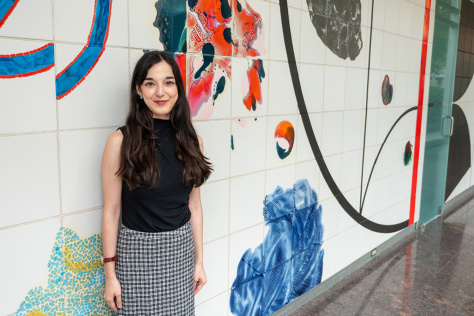
Photo of Tyler Jacks standing in front of a wall of colorful scientific images in the Koch Institute lobby and smiling for the camera.

Tyler Jacks Receives ACS Medal of Honor

American Cancer Society

Congratulations to Koch Institute Founding Director Tyler Jacks, who has been selected to receive the 2026 American Cancer Society Medal of Honor. The organization’s highest honor, this award is given to individuals whose work has fundamentally advanced the fight against cancer. Jacks is recognized for his extraordinary scientific contributions to the field of cancer biology as well as his leadership in shaping new, more effective models for collaborative, patient-centered research at MIT, non-profit Break Through Cancer, and the national level. 

Filter by

Filter by Title/Description

Filter by Topic

Filter by Year

Upgraded Model

Nature Biotechnology

To help mouse models of disease better resemble human genetics, the Sánchez-Rivera group has developed H2M, a computational pipeline to predict mouse genetic variants that mirror the sequence and functional effects of human variants. H2M also performs mouse-to-human and other types of variant mapping for precision genome-editing tools. Published in Nature Biotechnology, the researchers share their database, libraries, and web tool online.

Connecting biophysical measurements and gene expression to understand tumor heterogeneity

Science Advances

Many tumors comprise a heterogeneous mix of cell types, each of which can play various roles in cancer progression and treatment response and may serve as diagnostic or therapeutic targets. The contributions of different cells can be difficult to uncover using conventional molecular analyses, histology, or immunophenotyping. In a study published in Science Advances the Manalis lab shows they can use their single cell analysis platform to link cells’ biophysical properties—in this case, buoyant mass and stiffness—to gene expression to identify clinically relevant cell types within mantle cell lymphoma cells. 

Eliezer Calo on Ribosome Biogenesis in Disease

MIT News

Eliezer Calo investigates the genetic basis of craniofacial disorders, using disease-associated mutations to uncover fundamental mechanisms of protein synthesis. As highlighted in a recent MIT News profile, his work reveals how defects in ribosome biogenesis and nucleolar organization disrupt protein production and shape embryonic development.

No Longer Asea in Measuring Water Content

Science Advances

A new approach from the Manalis lab enables, for the first time, precise, quantitative measurement of water content within individual samples of complex 3D biological models. In a Science Advances paper, the team demonstrated their technique in patient-derived glioblastoma tumor spheroids. By adapting an industrial-grade steel capillary tube into a mechanical resonator that inertially senses particle mass, the researchers were able to determine spheroid water content and detect changes in response to perturbations.Their approach opens opportunities to study water homeostasis —and, by extension, molecular crowding— and its role in tumor biology and drug response across various experimental systems. It is currently being applied in a Bridge Project collaboration between Manalis and co-author Keith Ligon at Dana Farber Cancer Institute.This work has been supported in part by the MIT Center for Precision Cancer Medicine and the Ludwig Center at MIT.

Kinase Closed: Shutting Down Cancer's Escape Routes

MIT News

Forest White and Cameron Flower PhD ’24 have uncovered why drugs that inhibit tyrosine kinase signaling pathways, such as imatinib (Gleevec), fail in some patients.  By analyzing tumor phosphoproteomics, the White Lab team found that many resistant cells are intrinsically wired to resist tyrosine kinase inhibitors: backup signaling networks are already running to support vital functions such as cell growth and division, even when tyrosine kinase inhibitors work as intended. 

As reported in Proceedings of the National Academy of Sciences, researchers overcame this resistance in cell models by pairing a tyrosine kinase inhibitor with a drug that targets the backup pathway—an approach currently in clinical trials for lung cancer. 

“We are really excited to watch these clinical trials and to see how well patients do on these combinations. And I really think there’s a future for using tyrosine phosphoproteomics to guide this clinical decision-making,” White says. The research was funded in part by the MIT Center for Precision Cancer Medicine.
 

Enduring Passion for Precision Oncology

MIT News

A Goldwater Scholar and triathlete, senior Alex Tang balances a love of endurance sports and medical journalism with cutting-edge cancer research. His time as a student with Tyler Jacks and Michael Hemann studying combined immunotherapy and targeted therapy in metastatic colorectal cancer helped inspire his goal to advance precision oncology as a physician-scientist.

Matt Jones Named Cancer Grand Challenges Future Leader

Cancer Grand Challenges

Matt Jones has been named a Cancer Grand Challenges Future Leader, part of a global initiative to tackle cancer’s hardest problems. His research uses single-cell and lineage-tracing tools to study tumor evolution. “By reconstructing cancer’s history,” he explains, researchers can better anticipate disease progression and identify new opportunities for intervention.

KI stars shine bright in Cancer Grand Challenges

Whitehead Institute

The Koch Institute made a brilliant showing in the latest round of Cancer Grand Challenges, which brings together the world’s top scientists and clinicians across diverse disciplines to accelerate progress against cancer.Stefani Spranger was a finalist for the DARK-MATTERS team and Jonathan Weismann joins the ILLUMINE team, both aiming to transform new insights into the largely unexplored “dark proteome” into cancer therapies. 

Tyler Jacks Receives ACS Medal of Honor

American Cancer Society

Congratulations to Koch Institute Founding Director Tyler Jacks, who has been selected to receive the 2026 American Cancer Society Medal of Honor. The organization’s highest honor, this award is given to individuals whose work has fundamentally advanced the fight against cancer. Jacks is recognized for his extraordinary scientific contributions to the field of cancer biology as well as his leadership in shaping new, more effective models for collaborative, patient-centered research at MIT, non-profit Break Through Cancer, and the national level. 

Mini Livers, Major Potential

Newsweek

A team led by Sangeeta Bhatia has engineered injectable “mini livers” that can support failing livers and provide an alternative to transplantation. A study appearing in Cell Biomaterials shows that cells injected in mice survived at least two months and produced key liver enzymes and proteins.