News

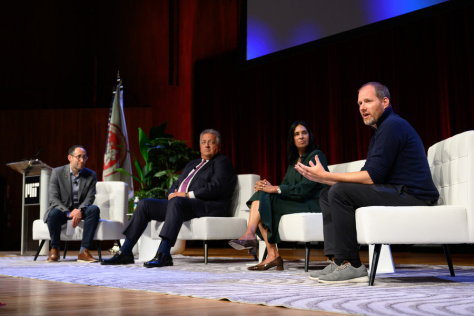
Three men and a woman standing

Future Health joins BioConvergence Cancer Alliance as founding member

Future Health Initiatives

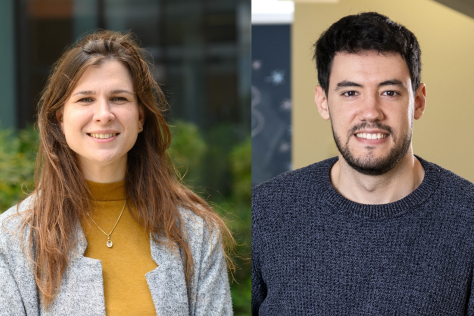
The BioConvergence Cancer Alliance at MIT’s Koch Institute is expanding its global network with the addition of a founding member: Future Health – A Global Initiative by Abu Dhabi.The partnership will create new opportunities for collaboration across research, healthcare, and industry, advancing efforts in cancer prevention, earlier detection, and more effective treatments  

Filter by

Filter by Title/Description

Filter by Topic

Filter by Year

From tumors to tools

MIT News

An international team led by researchers at the Koch Institute, the Broad Institute, Dana-Farber Cancer Institute, and the National Cancer Institute has created nearly 700 well-documented patient-derived cancer models representing 25 cancer types.Senior author Jesse Boehm contributed to the decade-long Human Cancer Models Initiative, which created mostly organoid models that could help researchers identify new drug targets and test potential treatments for a broader range of cancers.

Elicio enters a new phase

Lustgarten Foundation

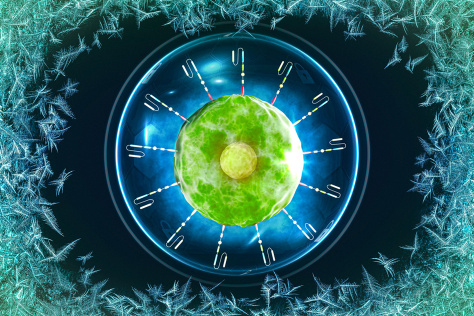
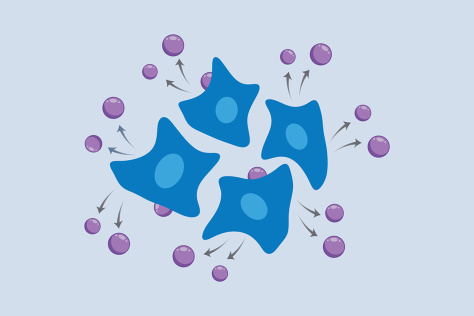
Elicio will begin a Phase I trial testing the efficacy of combining their KRAS-targeted  cancer vaccine with chemotherapy in pancreatic cancer. Elicio's cancer vaccine is based on  approach originally developed in the laboratory of former Koch Institute faculty member Darrell Irvine, where "amphiphile" particles hitchhike on albumin molecules in the bloodstream to the lymph nodes, where they teach the immune system to fight cancer. 

The new trial, with support from the Lustgarten Foundation and Break Through Cancer, builds on robust results from an earlier Phase 1 trial testing the vaccine following surgery and chemotherapy, and will evaluate whether stronger results can be obtained when the vaccine is administered together with a chemotherapy. Researchers will test the efficacy of combining the KRAS-targeted immunotherapy with chemotherapy in pancreatic cancer, as well as explore the biology of therapy response and seek additional . 

Douglas Lauffenburger named Institute Professor

MIT News

Three cheers to Douglas Lauffenburger, one of a trio of MIT faculty members named Institute Professors this year. Lauffenburger receives MIT’s highest honor for his contributions as the founding head of the Department of Biological Engineering and key roles in launching interdisciplinary programs, as well as his work developing predictive models of molecular and cellular networks.

Remembering Susumu Tonegawa 

MIT News

The Koch Institute joins the MIT community in mourning Nobel Laureate Susumu Tonegawa, an alumnus of the MIT Center for Cancer Research (our predecessor) and founding director of the Picower Institute for Learning and Memory. Driven by curiosity about fundamental questions in biology, Tonegawa made groundbreaking discoveries in immunology and neuroscience. Awarded the 1987 Nobel Prize in Physiology or Medicine for uncovering the genetic basis of antibody diversity, he later transformed our understanding of how memories are formed, stored, and recalled.

PRMT5 inhibitors in Merkel cell carcinoma

Nature Communications Biology

A Nature Communications Biology study published by Bridge Project collaborators Jacqueline Lees (Koch InstituteI) and James DeCaprio  (Dana-Farber Cancer Institute) uncovers previously unknown mechanisms underlying the sensitivity of Merkel cell carcinoma, a rare and aggressive neuroendocrine skin cancer, to PRMT5 inhibitors. They found that PRMT5 inhibitor sensitivity is not dependent on the activation of tumor-suppressor gene p53, as previously believed. They further showed that PRMT5 inhibition disrupts intron splicing and impairs ATR signaling with increased DNA damage, which may point the way to improving the efficacy of PRMT5 inhibitors and help clinicians identify patients who are more likely to respond to these therapies.

Equipped for the future

Massachusetts LIfe Sciences Center

Massachusett’s Healey-Driscoll Administration announced more than $19.7 million in funding supporting the life sciences, in funding supporting 23 projects that will expand cutting-edge research infrastructure, accelerate artificial intelligence and data science, advance next-generation therapeutic delivery technologies, and help move promising discoveries closer to patients. The KI’s Integrated Tissue Processing and Spatial Imaging Core Facility will receive a research equipment grant, which will support a shared, high-throughput auto-stainer.  

Sangeeta Bhatia, then and now

The Scientist

In celebration of their 40th anniversary, The Scientist catches up with Sangeeta Bhatia since her profiles in 2006 and  2013, giving her an opportunity to reflect on her journey in pioneering liver research, developing advanced diagnostics, and launching multiple companies. She emphasizes that she never expected her career to take this path: “We're all so focused on being strategic and planning our journey, and the truth of the matter is that the field I ended up in didn't exist on the day I graduated. The best things that happen are surprises.”

Future Health joins BioConvergence Cancer Alliance as founding member

Future Health Initiatives

The BioConvergence Cancer Alliance at MIT’s Koch Institute is expanding its global network with the addition of a founding member: Future Health – A Global Initiative by Abu Dhabi.The partnership will create new opportunities for collaboration across research, healthcare, and industry, advancing efforts in cancer prevention, earlier detection, and more effective treatments  

Sound thinking

MIT News

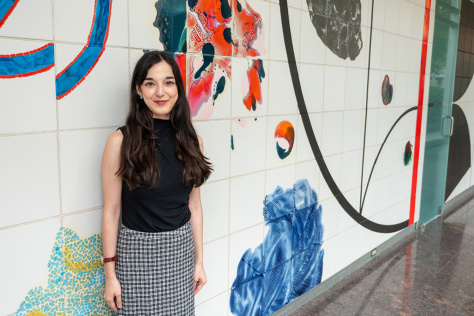
KI alum Canan Dagdeviren and colleagues have developed a portable ultrasound system, described in Nature Communications, that could make reliable breast imaging more accessible. Dagdeviren was also named one of four winners of the 2026 Nature Awards Healthspan Accelerator, which recognizes research with the potential to transform human healthspan.

Whitney Henry named 2026 Pew Scholar

MIT News

Congratulations to Koch Institute faculty member Whitney Henry on being named a 2026 Pew Scholar in the Biomedical Sciences. The prestigious program supports early-career investigators with four years of flexible funding to pursue innovative research. Henry studies ferroptosis in cell fate and tissue remodeling, with implications for disease and regeneration.