News

Three screens of cancer cells

From tumors to tools

MIT News

An international team led by researchers at the Koch Institute, the Broad Institute, Dana-Farber Cancer Institute, and the National Cancer Institute has created nearly 700 well-documented patient-derived cancer models representing 25 cancer types.

Senior author Jesse Boehm, co-first author Mushriq Al-Jazrawe and hundreds of colleagues contributed to what amounted to the decade-long Human Cancer Models Initiative (HCMI), which created and characterized these organoid and other next-generation cell models that could help researchers identify new drug targets and test potential treatments for a broader range of cancers.

Filter by

Filter by Title/Description

Filter by Topic

Filter by Year

New mRNA vaccine can take the heat

MIT News

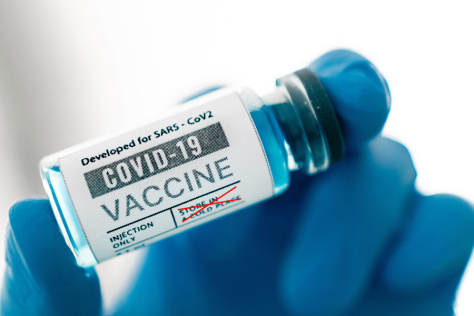
Demonstrating an AI framework they developed, the Jaklenec and Langer Labs designed shelf-stable mRNA vaccines that could make treatments for Covid-19, cancer, and many other diseases more accessible. Described in Nature Biotechnology, the heat-tolerant mRNA vaccine could be distributed in places that lack expensive cold-chain infrastructure and adapted for novel administration methods, such as microneedle patches.

A star in drug delivery

Nature Communications

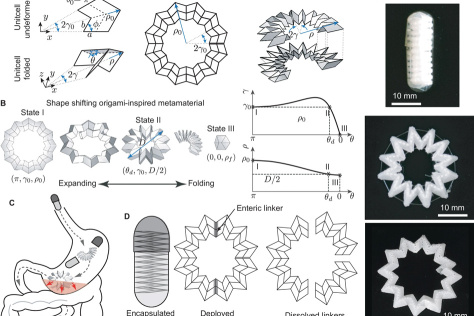
Inspired by origami, researchers in the Langer and Traverso Labs designed an ingestible capsule that unfolds in the stomach to deliver drugs over periods as long as three weeks. Described in Nature Communications, the device is suited for a wide range of therapies and could make long-acting drug delivery more accessible in areas with limited medical infrastructure. 

A sweeter way to preserve CAR-T cells

MIT News

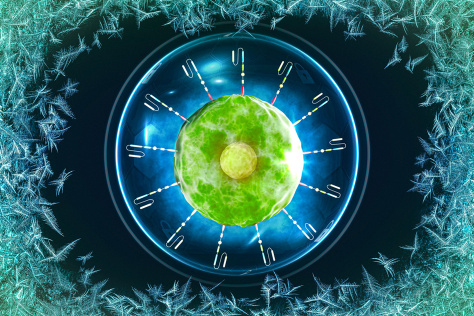
The Jaklenec and Langer groups developed a new way to preserve CAR-T cells using naturally occurring sugars, reducing the need for chemical “antifreeze” typically used to protect cells during freezing. Their findings, published in Trends in Biotechnology, could help make CAR-T cell therapy more accessible by simplifying cell storage and shipping.

This work was supported by the Koch Institute’s Convergence Scholars Program and postdoctoral fellowships supported by the Virginia and D.K. Ludwig Fund for Cancer Research.

Finding purpose through research 

MIT News

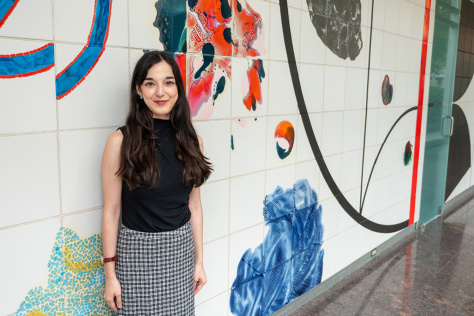
“It was intense, but it gave me confidence that I could handle a research environment like MIT's,” says CUNY undergrad Marina Milea of the MIT Summer Research Program in Biology that brought her to the Jacks Lab. Milea investigated how lung cancers driven by KRAS mutations develop resistance to targeted therapies, gaining skills, knowledge, and independence under the mentorship of grad student Carrie Rodriguez. 

Meet the 2026 Amon Award Winners

MIT Koch Institute

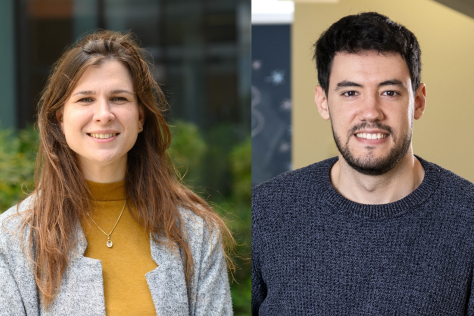
Congratulations to the winners of the 2026 Angelika Amon Young Scientist Award: Karin Goldberg of the Weizmann Institute of Science in Israel and Rubén López Sandoval of ETH Zurich in Switzerland. 

The KI and MIT communities and Amon Lab alumni, are invited to attend Goldberg’s presentation of her research at the Amon Award ceremony on Thursday, October 29, 2026 at 2:00 p.m. in the Luria Auditorium. She will present on “Beyond Protein Breakdown: New Insights into Proteasomal Degradation in Innate Immunity.”

The messenger RNA is in the medium

MIT News

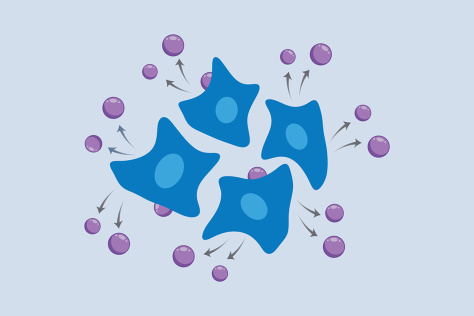
The Blainey Lab developed a method for measuring a cell’s transcriptome without killing it, as current methods do. The technique, described in Cell, induces cultured cells to export mRNA via virus-like-particles. Researchers can repeatedly sample the culture medium over time to track changes in gene expression. The team has collaborated with the Griffith lab by collecting perfused media samples to apply their method to organ-on-a-chip devices, reducing the number of microfluidic platforms required for the experiment from 21 to three.

Mentors, mRNA, and freedom to fail fast 

MIT News

Alums Jacob Becraft PhD ’19 and Tasuku Kitada founded Strand Therapeutics to move research from the Weiss and Irvine Labs into the clinic, developing mRNA medicines to engage the immune system against cancer. With the company now in mid-stage trials, Becraft discusses strengths of MIT’s support for entrepreneurship with President Kornbluth at MIT Sandbox’s anniversary celebration. 

Lighting the way to earlier cancer detection

MIT's Curiosity on a Mission

Angie Belcher's curiosity took her from studying seashells to engineering viruses that light up hidden tumors. Seeded deep within the body, ovarian cancer is hard to detect early; by the time symptoms appear, it has often metastasized. Her imaging tools can detect tumors as small as half a millimeter, aiming to catch cancer when it can be removed before spreading. Belcher believes early detection could become routine within a decade.

Moderna's mRNA vaccines take on cancer

New York Times

Moderna, co-founded by Bob Langer, announced that late-stage trials showed its mRNA cancer vaccine reduced the ​risk of melanoma recurrence and spread when used in conjunction with an immunotherapy called pembrolizumab—the first positive results for mRNA cancer vaccines and for combination therapies with pembrolizumab. Moderna is testing similar approaches against lung, breast, and pancreatic cancers with its partners.

New York Times | Washington Post | STAT | CNBC

Matrisome Bio named 2026 Prix Galien USA Nominee

PR Newswire

Matrisome Bio, co-founded by KI alum Noor Jailkhani, Richard Hynes and Sangeeta Bhatia, has been named a 2026 Prix Galien USA nominee for Best Startup. The company is developing therapies that target the extracellular matrix of tumors and metastases using a platform technology initially developed by Jailkhani as a Mazumdar-Shaw International Oncology Fellow. Winners will be announced October 29 in New York City.