News

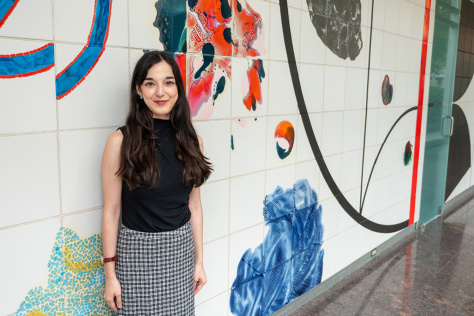
Astrellas and KI researchers stand together in Astrellas Looby

MIT welcomes Astellas to the BioConvergence Cancer Alliance 

The Koch Institute announced that Astellas Pharma has joined the BioConvergence Cancer Alliance. As a member of the alliance, Astellas will closely engage with a thriving research community at the Koch Institute and flagship initiatives, as well as explore opportunities for formal scientific collaborations with faculty members at the Institute.

Filter by

Filter by Title/Description

Filter by Topic

Filter by Year

MIT Koch Institute and the Research Institute, National Cancer Center Japan launch strategic collaboration

MIT Koch Institute

The MIT Koch Institute and the Research Institute, National Cancer Center Japan, a leading national research institute focused on advancing oncology through basic and translational research, have signed a Memorandum of Understanding. The collaboration will leverage both parties’ excellence in research to solve the most pressing problems in cancer and shape the future of convergence science in oncology, specifically in the areas of immune-oncology, basic and epidemiologic cancer research, as well as prevention, diagnosis, screening, treatment, cancer control, and survivorship.

Hammond Lab alum Claire Underwood wins Fulbright award

MIT News

Claire Underwood, a senior studying chemical-biological engineering and former researcher in the Hammond Lab, has received a Fulbright award to conduct research at the University of Minho in Portugal. There, she will study high-throughput fabrication techniques for cell-embedded microtissues with applications in drug discovery before pursuing a PhD in chemical engineering.

Whitney Henry Named 2026 Searle Scholar

MIT News

Congratulations to Koch Institute faculty member Whitney Henry, one of four MIT scientists named a 2026 Searle Scholar and among just 15 selected nationwide. Henry's lab investigates ferroptosis, an iron-dependent form of cell death, to target therapy-resistant cancer cells driving tumor relapse. The award provides $450,000 in flexible funding over three years to support her work.

Robert Langer Wins 2026 Welch Award in Chemistry

The Welch Foundation

Robert Langer has been named the 2026 recipient of the Robert A. Welch Award in Chemistry, established to recognize chemical research that meaningfully benefits humankind and carrying a $500,000 prize. His pioneering work in controlled drug release and tissue engineering has transformed patient care worldwide, generating tens of companies, licensing to over 400 organizations globally, and inspiring hundreds of researchers who now lead their own labs.

MIT welcomes Astellas to the BioConvergence Cancer Alliance 

The Koch Institute announced that Astellas Pharma has joined the BioConvergence Cancer Alliance. As a member of the alliance, Astellas will closely engage with a thriving research community at the Koch Institute and flagship initiatives, as well as explore opportunities for formal scientific collaborations with faculty members at the Institute.

Elazer Edelman Receives the 2026-2027 Killian Award

MIT News

Elazer Edelman received the James R. Killian Jr. Faculty Achievement Award, the highest honor awarded to MIT faculty members. Edelman is recognized for pioneering advances in cardiovascular medicine and medical devices, including research adapting drug-coated stents for pancreatic cancer treatment. PanTher Therapeutics, which he co-founded, is testing the stents in clinical trials.

A new shot at boosting T-cell cancer defense

MIT News

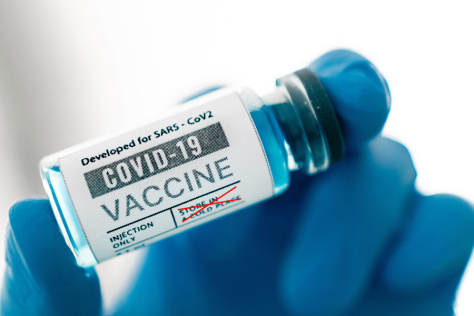
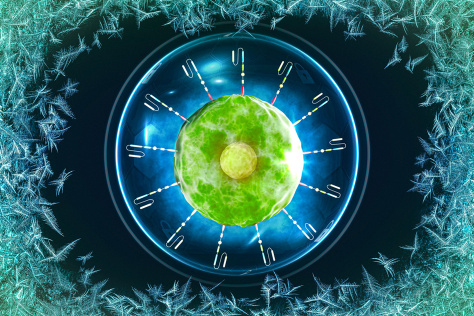
Researchers from the Anderson and Langer labs have developed a new way to supercharge T-cell response to cancer with an mRNA-based therapeutic vaccine adjuvant. Unlike most immunotherapies, which activate immune cells via external signals, this approach targets the cells’ internal machinery. In a Nature Biotechnology study of mouse models of various cancers, the adjuvant enabled the immune system to completely eradicate most tumors, alone or combined with tumor antigen. It also boosted the T-cell response to influenza and Covid-19 vaccines, suggesting the approach’s utility for viral infections as well. 

This work was supported in part by the Marble Center for Cancer Nanomedicine

Photonic Finish 

MIT News

MIT researchers co-led by Ed Boyden developed a powerful method for creating photonic devices by first laser carving hydrogel and then shrinking it to nanoscale. The team plans to adapt the technology for classifying cells flowing through a microfluidic device, which could help identify rare circulating tumor cells in a blood sample.
 

Jessica Stark Wins Pershing Square Sohn Cancer Prize

Business Wire

Congratulations to Jessica Stark for winning the Pershing Square Sohn Cancer Prize! The award provides $750,000 to support early-career investigators with bold ideas and the potential to transform cancer research.The funding will help Stark’s group develop new kinds of precision immunotherapies that target sugars on the surfaces of cancer cells. These new medicines promise to extend the benefits of precision medicine and the curative potential of immunotherapy to more cancer patients. Stark recently described her work in Nature Biotechnology’s Five Questions series.

Point of Order

MIT News

The Galloway Lab showed that the order and orientation of neighboring genes control their expression. In a study appearing in Science, researchers created tandem gene circuits (one gene after another) and divergent circuits (genes pointed away from each other). Because of changes to the shape of DNA that occurs during transcription, downstream genes were suppressed in tandem circuits and both genes were amplified in divergent circuits. Their findings could make it easier to design synthetic gene circuits that program cell and gene therapies.