News

Golden particles join a DNA strand.

Precision gene editing

MIT News

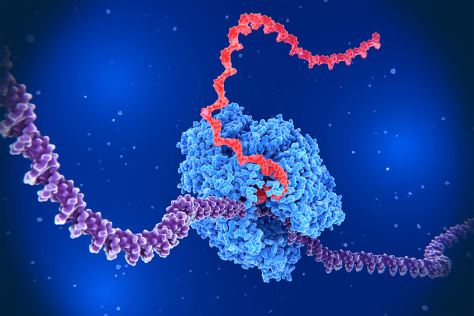
Robert Langer, Phillip Sharp, and research scientist Vikash Chauhan developed an engineered prime editing system, reported in Nature, that reduces unintended DNA changes by up to 60-fold. The new gene editor could make it easier to explore cell biology questions, such as how populations of cancer cells evolve, as well as develop gene therapy treatments for cancer and other diseases.

Filter by

Filter by Title/Description

Filter by Topic

Filter by Year

Alumni Innovators

Forbes

At Strand Therapeutics, Jake Becraft and Tasuku Kitada are moving research with roots in the Weiss and Irvine labs toward the clinic, by creating mRNA therapies that instruct tumors to produce signals that make them visible to the immune system.

Tracing cancer's family tree

MIT News

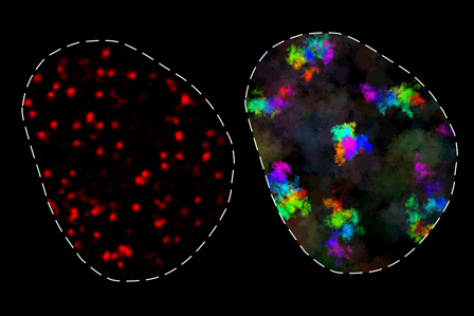
Jonathan Weissman and his group have developed PEtracer, a tool that reconstructs cellular family trees and maps their locations within tissues. Published in Science, the research reveals how tumors grow and evolve over time, showing how both intrinsic cell traits and environmental factors shape tumor progression.

AI Brings Hidden Cells Into Focus

MIT News

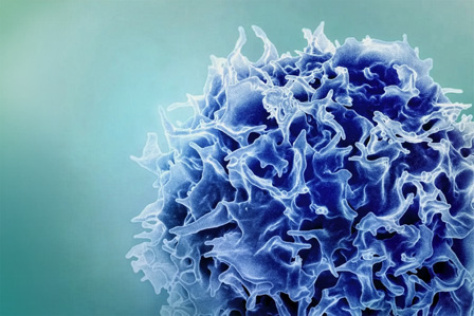
A Shalek lab research collaboration led by postdoc Bokai Zhu has developed CellLENS (Cell Local Environment and Neighborhood Scan), an AI-powered approach that uncovers hidden cell subtypes influencing immune responses in cancer. Published in Nature Immunology, the study reveals patterns of cell heterogeneity that could advance cancer immunotherapy.

Can your liver analytic multi-task?

MIT News

A research team, led by Jonathan Weissman, has developed Perturb-Multi, a new approach that simultaneously measures different downstream effects of genetic changes—including overall gene expression patterns, protein distribution, and cell structure—in intact liver tissue.  

Whitney Henry named HHMI Freeman Hrabowski Scholar

Howard Hughes Medical Institute

Whitney Henry has been named a 2025 HHMI Freeman Hrabowski Scholar. Her work focuses on ferroptosis, a form of regulated cell death with implications for cancer therapy. The award recognizes early-career faculty for exceptional research and commitment to advancing diversity in science. 

Strong and Stretchy

MIT News

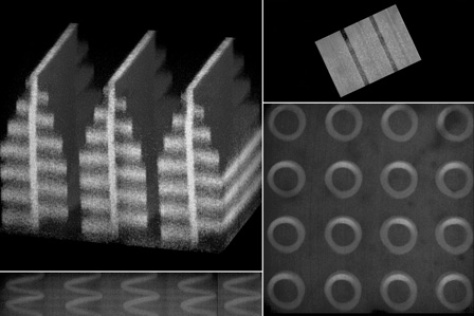
A 2025 Koch Institute Image Awards winner, research lead by James U. Surjadi and Bastien F. G. Aymon reveals a 3D-printable metamaterial—inspired by collagen’s strength and flexibility—that offers new ways to study how cancer cells migrate through tissue.  

Density detector

MIT News

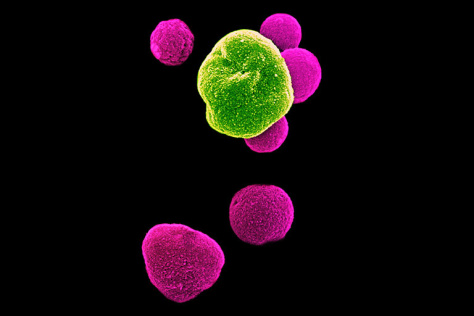
Scott Manalis, collaborating with Dana-Farber Cancer Institute's Keith Ligon, has developed a technique to measure single-cell density for predicting whether immunotherapies will work in a patient or how a tumor will respond to drug treatment. This method, detailed in Nature Biomedical Engineering, originated as a project funded in part by the MIT Center for Precision Cancer Medicine.   

Bravo: smarter breast cancer scans

NBC Boston

Recently featured on NBC Boston, Cima Lab alum Canan Dagdeviren is developing wearable ultrasound technology for early breast cancer detection. The device, embedded in a bra, delivers results for less than $3 and sends data to the cloud and the patient’s doctor, offering a valuable tool for diagnosing early stage tumors in high-risk patients.  

MIT Advocacy in Action at the AACR’s 2025 Hill Day

Koch Institute

MIT Koch Institute postdoc Meaghan McGeary traveled to Washington, DC to advocate for increased federal funding for cancer research as part of the annual American Association for Cancer Research (AACR) Hill Day. Joining other early-career scientists in a mission to make more than 50 congressional visits in a single day, she shared her experiences with policymakers, emphasizing the importance of stable research funding.  

Alum-inating metabolism

MIT News

Using its phosphorylation analysis tools, the White Lab has identified hundreds of enzymes, many linked to chronic stress response pathways, that cause metabolic dysfunction and weight gain when mice are fed high-fat diets. The study, led by Koch Institute alum Tigist Tamir and published in Molecular Cell, showed effects were more pronounced in male mice and that an antioxidant reversed most of the damage. Tamir continues their work on cell signaling and metabolism in obesity and cancer at University of North Carolina at Chapel Hill School of Medicine. This work was partly supported by the MIT Center for Precision Cancer Medicine and a fellowship from the Ludwig Center at MIT.