News

Headshot of Richard Hynes, sitting in front of a bookcase

Remembering Richard Hynes

MIT Koch Institute

With great sadness, the Koch Institute marks the passing of Richard O. Hynes PhD ’71, whose discoveries reshaped modern understandings of how cells interact with each other and their environment, who died January 6, 2026 at age 81.

Filter by

Filter by Title/Description

Filter by Topic

Filter by Year

Remembering Richard Hynes

MIT Koch Institute

With great sadness, the Koch Institute marks the passing of Richard O. Hynes PhD ’71, whose discoveries reshaped modern understandings of how cells interact with each other and their environment, who died January 6, 2026 at age 81.

From Nematode to Nobel

McGovern Institute

Why study worms? H. Robert Horvitz, David H. Koch (1962) Professor of Biology, with several notable former trainees and fellow Nobel laureates, makes the case in a recent PNAS paper. They highlight critical discoveries—spanning normal biology, gene regulation, and diseases including cancer—as well as research tools for imaging that have emerged from studies of a microscopic roundworm, and emphasize the community spirit and resource sharing that enabled and continue to enable this work.

Forest White Honored with Committed to Caring Award

MIT News

Congratulations to Forest White on receiving MIT’s Committed to Caring Award! This graduate student‑nominated honor recognizes faculty members whose mentorship fosters resilience, curiosity, and compassion, having a lasting impact on students’ academic and personal journeys. Forest joins 18 honorees exemplifying exceptional care and guidance in the MIT community.

Sean Luk: Addressing the urgent need for better immunotherapy  

MIT News

Motivated by her family’s cancer experiences, MIT senior Sean Luk engineers proteins in the Wittrup Lab to boost the immune system’s attack against tumors and improve cancer immunotherapies. “The complexity of the immune system really fascinated me, and it is incredible that we can build antibodies in a very logical way to address disease,” Luk says.

How does high fat diet drive tumors?

MIT News

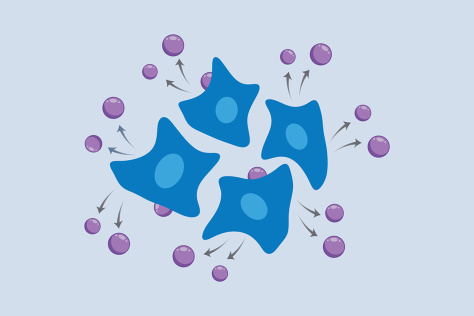
A new Cell study from the Shalek and Yilmaz labs suggests liver cells exposed to too much fat—via high fat diet—revert to an immature state that is more susceptible to cancer-causing mutations. Partly supported by the MIT Stem Cell Initiative, the researchers showed that chronic metabolic stress causes individual liver cells to prioritize their own survival over activities important for the tissue and organ as a whole; they also uncovered specific molecular mechanisms by which this occurs.

Sweet Sabotage: Disarming Cancer’s Sugary Defense

MIT News

Stark Lab researchers have developed a protein therapeutic that disables an immune “brake” engaged by cancer cells via cell surface sugars called glycans. A study published in Nature Biotechnology shows their multifunctional molecules, called AbLecs, can block glycan-mediated immune suppression and boost anti-cancer immune responses across multiple cancers. Combining a tumor-targeting antibody with a lectin, or glycan-binding receptor, AbLecs are now in translational development at Valora Therapeutics, co-founded by Stark.  

A Shot at Simpler Antibody Treatments

MIT News

Antibody treatments for cancer and other diseases are typically delivered intravenously, requiring hours-long hospital visits for each dose. The Doyle Lab’s new approach, reported in Advanced Materials, packs highly concentrated antibodies into solid microparticles that dissolve quickly after injection, fitting full doses in a standard syringe. This makes treatment faster, easier, and more accessible for patients who have difficulty getting to a hospital. 

The Koch Institute's Top Research Stories of 2025

MIT Koch Institute

As the year draws to a close, we’re excited to spotlight some of the most innovative and impactful research from the Koch Institute this year. 

NIH Director Jay Bhattacharya Visits MIT

MIT News

National Institutes of Health Director Dr. Jay Bhattacharya joined Rep. Jake Auchincloss at MIT for a wide‑ranging discussion on NIH’s "unified strategy" for reviewing grant applications, the importance of idea generation and rigorous testing, and support for early‑career scientists amid changes in grant review processes.

Hammond to Head School of Engineering

MIT News

The KI proudly shares the announcement of Institute Professor Paula Hammond, ’84, PhD ’93 as MIT’s new Dean of Engineering. A pioneering researcher, dedicated mentor, and highly effective leader, Paula is known for her creative, collaborative, and grounded approaches. She previously served as department head, vice provost for faculty and executive vice provost.