News

Three screens of cancer cells

From tumors to tools

MIT News

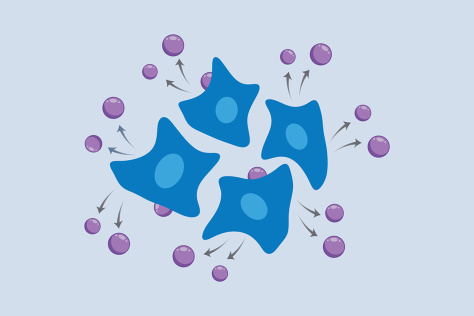
An international team led by researchers at the Koch Institute, the Broad Institute, Dana-Farber Cancer Institute, and the National Cancer Institute has created nearly 700 well-documented patient-derived cancer models representing 25 cancer types.

Senior author Jesse Boehm, co-first author Mushriq Al-Jazrawe and hundreds of colleagues contributed to what amounted to the decade-long Human Cancer Models Initiative (HCMI), which created and characterized these organoid and other next-generation cell models that could help researchers identify new drug targets and test potential treatments for a broader range of cancers.

Filter by

Filter by Title/Description

Filter by Topic

Filter by Year

A star in drug delivery

Nature Communications

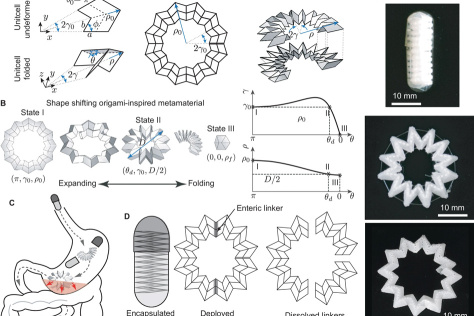
Inspired by origami, researchers in the Langer and Traverso Labs designed an ingestible capsule that unfolds in the stomach to deliver drugs over periods as long as three weeks. Described in Nature Communications, the device is suited for a wide range of therapies and could make long-acting drug delivery more accessible in areas with limited medical infrastructure. 

A sweeter way to preserve CAR-T cells

MIT News

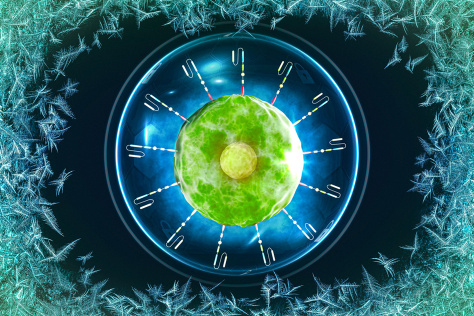
The Jaklenec and Langer groups developed a new way to preserve CAR-T cells using naturally occurring sugars, reducing the need for chemical “antifreeze” typically used to protect cells during freezing. Their findings, published in Trends in Biotechnology, could help make CAR-T cell therapy more accessible by simplifying cell storage and shipping.

This work was supported by the Koch Institute’s Convergence Scholars Program and postdoctoral fellowships supported by the Virginia and D.K. Ludwig Fund for Cancer Research.

Meet the 2026 Amon Award Winners

MIT Koch Institute

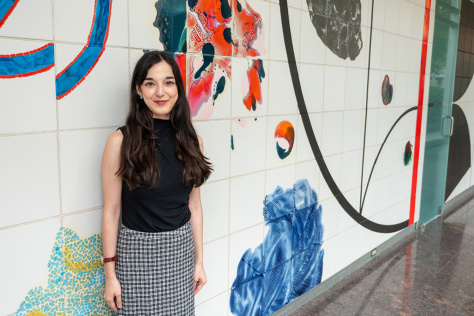
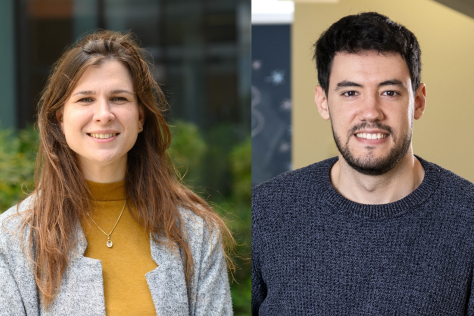
Congratulations to the winners of the 2026 Angelika Amon Young Scientist Award: Karin Goldberg of the Weizmann Institute of Science in Israel and Rubén López Sandoval of ETH Zurich in Switzerland. 

The KI and MIT communities and Amon Lab alumni, are invited to attend Goldberg’s presentation of her research at the Amon Award ceremony on Thursday, October 29, 2026 at 2:00 p.m. in the Luria Auditorium. She will present on “Beyond Protein Breakdown: New Insights into Proteasomal Degradation in Innate Immunity.”

Matrisome Bio named 2026 Prix Galien USA Nominee

PR Newswire

Matrisome Bio, co-founded by KI alum Noor Jailkhani, Richard Hynes and Sangeeta Bhatia, has been named a 2026 Prix Galien USA nominee for Best Startup. The company is developing therapies that target the extracellular matrix of tumors and metastases using a platform technology initially developed by Jailkhani as a Mazumdar-Shaw International Oncology Fellow. Winners will be announced October 29 in New York City.

A potential new target for lung cancer interception

MIT News

As lung cancer increasingly affects people who have never smoked, researchers are working to understand what drives the disease and how it might be prevented. In a study published in Science Advances, the Bhatia and Jacks labs identified caspase-1 as a potential target for lung cancer interception, an approach that aims to stop cancer before it progresses. This research was supported by Frontier, Upstage Lung Cancer, the Marble Center for Nanomedicine, and the Ludwig Center at MIT.

From tumors to tools

MIT News

An international team led by researchers at the Koch Institute, the Broad Institute, Dana-Farber Cancer Institute, and the National Cancer Institute has created nearly 700 well-documented patient-derived cancer models representing 25 cancer types.

Senior author Jesse Boehm, co-first author Mushriq Al-Jazrawe and hundreds of colleagues contributed to what amounted to the decade-long Human Cancer Models Initiative (HCMI), which created and characterized these organoid and other next-generation cell models that could help researchers identify new drug targets and test potential treatments for a broader range of cancers.

Elicio enters a new phase

Lustgarten Foundation

Elicio will begin a Phase I trial testing the efficacy of combining their KRAS-targeted  cancer vaccine with chemotherapy in pancreatic cancer. Elicio's cancer vaccine is based on  approach originally developed in the laboratory of former Koch Institute faculty member Darrell Irvine, where "amphiphile" particles hitchhike on albumin molecules in the bloodstream to the lymph nodes, where they teach the immune system to fight cancer. 

The new trial, with support from the Lustgarten Foundation and Break Through Cancer, builds on robust results from an earlier Phase 1 trial testing the vaccine following surgery and chemotherapy, and will evaluate whether stronger results can be obtained when the vaccine is administered together with a chemotherapy. Researchers will test the efficacy of combining the KRAS-targeted immunotherapy with chemotherapy in pancreatic cancer, as well as explore the biology of therapy response, characterize changes within the tumor microenvironment, and identify biomarkers that could guide future clinical trials. 

Douglas Lauffenburger named Institute Professor

MIT News

Three cheers to Douglas Lauffenburger, one of a trio of MIT faculty members named Institute Professors this year. Lauffenburger receives MIT’s highest honor for his contributions as the founding head of the Department of Biological Engineering and key roles in launching interdisciplinary programs, as well as his work developing predictive models of molecular and cellular networks.

Remembering Susumu Tonegawa 

MIT News

The Koch Institute joins the MIT community in mourning Nobel Laureate Susumu Tonegawa, an alumnus of the MIT Center for Cancer Research (our predecessor) and founding director of the Picower Institute for Learning and Memory. Driven by curiosity about fundamental questions in biology, Tonegawa made groundbreaking discoveries in immunology and neuroscience. Awarded the 1987 Nobel Prize in Physiology or Medicine for uncovering the genetic basis of antibody diversity, he later transformed our understanding of how memories are formed, stored, and recalled.

PRMT5 inhibitors in Merkel cell carcinoma

Nature Communications Biology

A Nature Communications Biology study published by Bridge Project collaborators Jacqueline Lees (Koch InstituteI) and James DeCaprio  (Dana-Farber Cancer Institute) uncovers previously unknown mechanisms underlying the sensitivity of Merkel cell carcinoma, a rare and aggressive neuroendocrine skin cancer, to PRMT5 inhibitors. They found that PRMT5 inhibitor sensitivity is not dependent on the activation of tumor-suppressor gene p53, as previously believed. They further showed that PRMT5 inhibition disrupts intron splicing and impairs ATR signaling with increased DNA damage, which may point the way to improving the efficacy of PRMT5 inhibitors and help clinicians identify patients who are more likely to respond to these therapies.