News

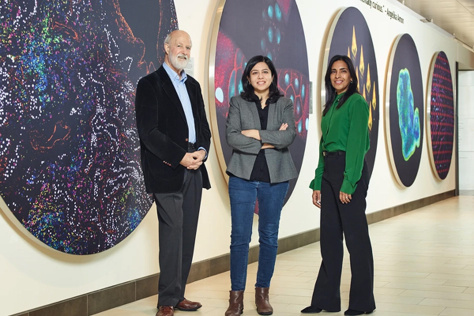
Astrellas and KI researchers stand together in Astrellas Looby

MIT welcomes Astellas to the BioConvergence Cancer Alliance 

The Koch Institute announced that Astellas Pharma has joined the BioConvergence Cancer Alliance. As a member of the alliance, Astellas will closely engage with a thriving research community at the Koch Institute and flagship initiatives, as well as explore opportunities for formal scientific collaborations with faculty members at the Institute.

Filter by

Filter by Title/Description

Filter by Topic

Filter by Year

Keene Abbott Receives Weintraub Graduate Student Award

The Fred Hutchinson Cancer Center

Congratulations to Keene Abbott, PhD, on receiving the 2026 Harold M. Weintraub Graduate Student Award, honoring exceptional achievement in the biological sciences. Abbott completed his PhD with Matthew Vander Heiden and is now a Research Fellow at Dana-Farber/Boston Children's Cancer and Blood Disorders Center. The award is given by the Fred Hutchinson Cancer Center, with recipients selected from an international pool of applicants based on the impact and originality of their research.

Spiky Success

Nature Biomedical Engineering

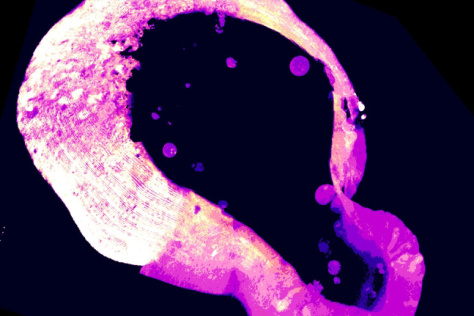
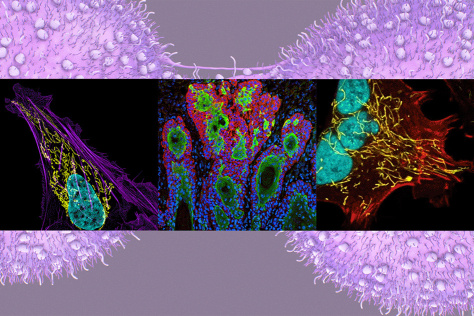
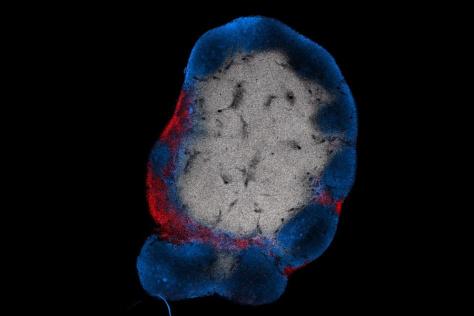
Immune monitoring in cancer, vaccination, infection, and autoimmune disorders requires detection of certain antigen-specific immune cells, yet because they are few and far between in the blood stream, finding them is a challenge.A platform from the Hammond and Irvine labs cleverly exploits memory T cells to induce circulating immune cells of interest to accumulate in the skin, which can then be sampled non-invasively by a microneedle patch. Recently published in Nature Biomedical Engineering, earlier work on this approach was supported by the Bridge Project and appears in the KI Image Awards Archive
 

Decoding Cancer Evolution 

MIT News

“We aim to decode cancer evolution and therapy resistance,” says MIT Biology’s new Assistant Professor Matthew G. Jones in a “3 Questions” Q&A. His lab combines AI, single‑cell lineage tracing, and predictive models to anticipate tumor progression, identify vulnerabilities, and guide strategies for more effective cancer treatment. 

From The Curiosity Desk

WGBH

On GBH’s The Curiosity Desk, Angela Belcher and Sangeeta Bhatia talk nanomaterial properties, light wavelengths, and ovarian cancer. Working toward better patient outcomes, they highlight the “huge window of opportunity” before precancerous lesions leave the fallopian tube and discuss their work on early detection and intervention. 

Love Lab improves drug production with AI

MIT News

In a study published in Proceedings of the National Academy of Sciences, the Love Lab designed an AI model for more efficient yeast-based production of protein drugs for the treatment of cancer and other diseases.Led by former postdoc and Mazumdar-Shaw International Oncology Fellow Harini Narayanan, the researchers used the Love Lab's yeast-based biomanufacturing platform to develop a large language model that optimizes genetic sequences for protein production—an unpredictable part of advancing new biologic drugs to the clinic.The study reflects Love's longstanding interest in improving both small- and industry-scale drug manufacturing processes. His perspectives as co-director of the new MIT Initiative for New Manufacturing are featured in the MIT Technology Review.

Irvine Lands on TIME100 Health 2026 List

Time Magazine

Long-time faculty member Darrell Irvine has been named to the 2026 TIME100 Health, an annual list of the 100 individuals who most influenced global health this year. Irvine is recognized for his work empowering the immune system to fight cancer, HIV, and other diseases, including therapeutic cancer vaccine approaches developed in his KI lab that have shown stunning promise in trials headed by KI startup Elicio Therapeutics. 

Sasisekharan elected to the National Academy of Engineering

MIT News

Congratulations to Ram Sasisekharan on his 2026 election to the National Academy of Engineering—one of the highest professional distinctions that can be accorded to an engineer. Sasisekharan was recognized for his groundbreaking contributions to public health and biomedical engineering, including discovering the U.S. heparin contaminant in 2008 and creating clinical antibodies for Zika, dengue, SARS-CoV-2, and other diseases.  
 

Vander Heiden and Shaw Elected as AACR Fellows

American Association for Cancer Research

KI Director Matthew Vander Heiden has been elected to the 2026 class of Fellows of the AACR Academy. Membership honors scientists whose work has had a lasting global impact on cancer research, including Vander Heiden’s work in cancer metabolism.  Alice Shaw, MD, PhD, was also elected, for her work in targeted therapies and precision oncology. A Jacks Lab alumna, she also served as the Koch Institute's inaugural Charles W. (1955) and Jennifer C. Johnson Clinical Investigator.  

Ultrasound Goes Ultra Accessible 

MIT News

A portable, smartphone-sized 3D ultrasound sensor developed in the lab of KI alum Canan Dagdeviren could improve early breast cancer detection for high‑risk individuals. Clinical trials are evaluating its ability to detect tumors earlier than yearly mammograms in high-risk patients, and MIT entrepreneurship programs are helping a startup advance commercialization of this low-cost, miniaturized technology.

Gensaic on target: AI-powered delivery for smarter medicine

MIT News

Building on insights from her work as a graduate student adapting the Belcher Lab’s signature bacteriophage delivery platform, alum Uganda Tsedev has co‑launched Gensaic. The company’s AI‑powered platform helps guide design of precision protein “shuttles” that deliver therapeutic molecules to target tissues. This tissue‑selective approach could transform treatments for metabolic and other diseases while reducing side effects.