News

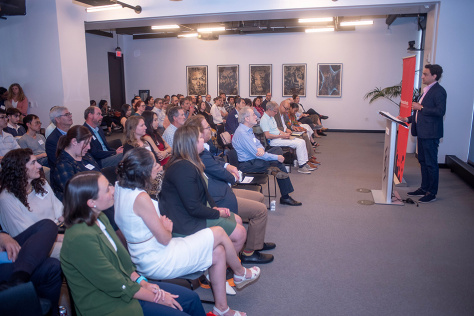
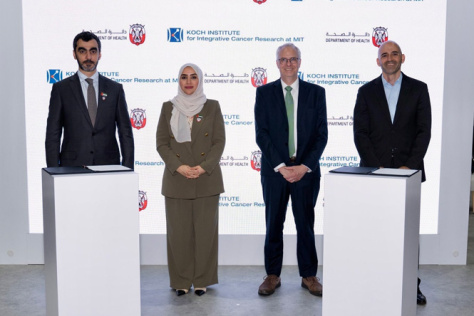
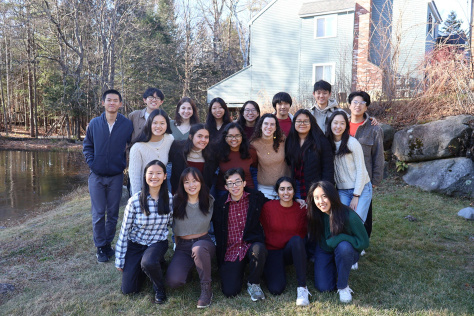
Astrellas and KI researchers stand together in Astrellas Looby

MIT welcomes Astellas to the BioConvergence Cancer Alliance 

The Koch Institute announced that Astellas Pharma has joined the BioConvergence Cancer Alliance. As a member of the alliance, Astellas will closely engage with a thriving research community at the Koch Institute and flagship initiatives, as well as explore opportunities for formal scientific collaborations with faculty members at the Institute.

Filter by

Filter by Title/Description

Filter by Topic

Filter by Year

Crystal Blue Sensation

Science Translational Medicine

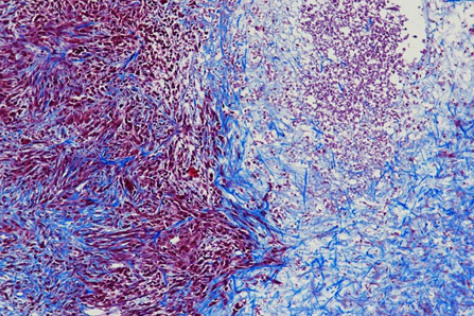
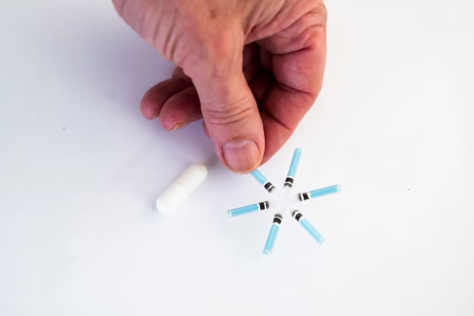
By developing slow release, crystal forms of drugs that block the CSF1R immune pathway and encapsulating them with insulin producing cells in alginate spheres, the Anderson/Langer group can reduce immune reactions that lead to biomedical implant failure and ensure stable, long-term glycemic control in models of diabetes. Early versions of this technology appear in the KI Image Awards Archive; a recent Science Translational Medicine study highlights contexts where the approach could be successful.  

Metabolic mixes modulate metastatic sites

Mass General Brigham

A Nature study from Matt Vander Heiden’s laboratory, in collaboration with MGB’s Rakesh Jain and Harvard’s George Church helps illuminate the factors determining where cancers can metastasize. In mice, the researchers quantified levels of metabolites in multiple tissues, investigating their relation to breast cancer cells’ ability to grow in different organs. They found a complex interplay of multiple nutrients in the local environment defines the sites of breast cancer metastases.This work was supported in part by The Bridge Project.

Remembering Richard Hynes

MIT Koch Institute

With great sadness, the Koch Institute marks the passing of Richard O. Hynes PhD ’71, whose discoveries reshaped modern understandings of how cells interact with each other and their environment, who died January 6, 2026 at age 81.

Unraveling Cancer's Safety Net

MIT Chemistry

Research from the labs of Francisco Sánchez-Rivera and Matthew Shoulders shows that tumors create an environment primed for certain dangerous mutations. The study draws on the Sanchez-Rivera group’s gene-editing tools and p53 expertise to show that elevated protein-folding networks buffer harmful TP53 variants, enabling tumor survival and growth, as well as drug resistance. 

From Nematode to Nobel

McGovern Institute

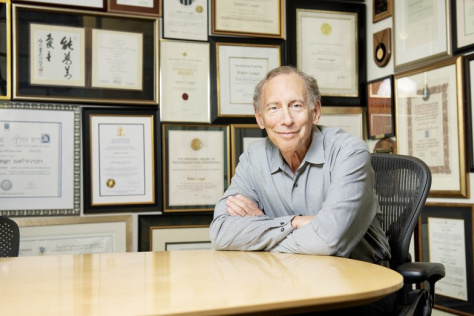
Why study worms? H. Robert Horvitz, David H. Koch (1962) Professor of Biology, with several notable former trainees and fellow Nobel laureates, makes the case in a recent PNAS paper. They highlight critical discoveries—spanning normal biology, gene regulation, and diseases including cancer—as well as research tools for imaging that have emerged from studies of a microscopic roundworm, and emphasize the community spirit and resource sharing that enabled and continue to enable this work.

Forest White Honored with Committed to Caring Award

MIT News

Congratulations to Forest White on receiving MIT’s Committed to Caring Award! This graduate student‑nominated honor recognizes faculty members whose mentorship fosters resilience, curiosity, and compassion, having a lasting impact on students’ academic and personal journeys. Forest joins 18 honorees exemplifying exceptional care and guidance in the MIT community.

Sean Luk: Addressing the urgent need for better immunotherapy  

MIT News

Motivated by her family’s cancer experiences, MIT senior Sean Luk engineers proteins in the Wittrup Lab to boost the immune system’s attack against tumors and improve cancer immunotherapies. “The complexity of the immune system really fascinated me, and it is incredible that we can build antibodies in a very logical way to address disease,” Luk says.

Predicting Peptides with CleaveNet

MIT News

Bhatia Lab researchers have developed CleaveNet, a novel AI system described in Nature Communications, to design peptides that could be cleaved efficiently and specifically by proteases of interest, such as enzymes overactive in cancer. 

Upgraded Model

Nature Biotechnology

To help mouse models of disease better resemble human genetics, the Sánchez-Rivera group has developed H2M, a computational pipeline to predict mouse genetic variants that mirror the sequence and functional effects of human variants. H2M also performs mouse-to-human and other types of variant mapping for precision genome-editing tools. Published in Nature Biotechnology, the researchers share their database, libraries, and web tool online.

How does high fat diet drive tumors?

MIT News

A new Cell study from the Shalek and Yilmaz labs suggests liver cells exposed to too much fat—via high fat diet—revert to an immature state that is more susceptible to cancer-causing mutations. Partly supported by the MIT Stem Cell Initiative, the researchers showed that chronic metabolic stress causes individual liver cells to prioritize their own survival over activities important for the tissue and organ as a whole; they also uncovered specific molecular mechanisms by which this occurs.