News

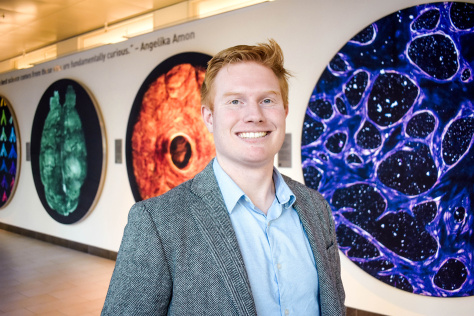
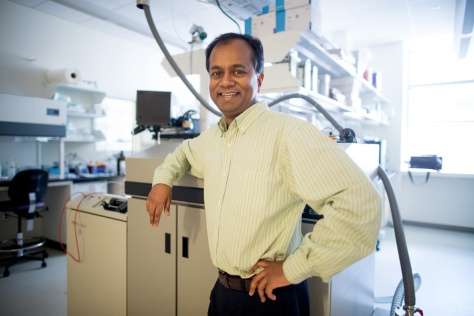
Astrellas and KI researchers stand together in Astrellas Looby

MIT welcomes Astellas to the BioConvergence Cancer Alliance 

The Koch Institute announced that Astellas Pharma has joined the BioConvergence Cancer Alliance. As a member of the alliance, Astellas will closely engage with a thriving research community at the Koch Institute and flagship initiatives, as well as explore opportunities for formal scientific collaborations with faculty members at the Institute.

Filter by

Filter by Title/Description

Filter by Topic

Filter by Year

Biogen Expansion Signals Optimism for Kendall Square

MIT News

Biogen, co-founded in 1978 by the Koch Institute's Phillip Sharp and Harvard's Wally Gilbert, broke ground on its new Kendall Square headquarters in September. The 580,000-square-foot complex, expected to open in 2028, reflects optimism for Cambridge’s future as a global biotech hub and a continued engine for innovation.

Precision gene editing

MIT News

Robert Langer, Phillip Sharp, and research scientist Vikash Chauhan developed an engineered prime editing system, reported in Nature, that reduces unintended DNA changes by up to 60-fold. The new gene editor could make it easier to explore cell biology questions, such as how populations of cancer cells evolve, as well as develop gene therapy treatments for cancer and other diseases.

FDA approves bladder cancer drug delivery device

MIT News

The FDA approved Johnson & Johnson's INLEXZO™ (gemcitabine intravesical system), a bladder cancer treatment system that originated in the lab of Michael Cima. Developed in the thesis work of KI alum Heejin Lee as well as at KI spinout TARIS Biomedical, the pretzel-shaped device is made of a special alloy with "shape memory," which folds in the bladder after insertion, delivering drugs over slowly over three weeks, to be repeated at the physician's discretion.  This approach offers safer and more effective treatment for one of the most expensive cancers, marked by high recurrence rates. In one study, 82% of patients treated with the system showed no evidence of cancer, with more than half remaining cancer-free nine months later. 

Vander Heiden goes to the State House

Massachusetts Legislature

On September 11, Koch Institute Director Matt Vander Heiden appeared before the Massachusetts Joint Committee on Economic Development and Emerging Technologies to represent MIT and the Koch Institute at a hearing exploring the contributions of universities to local and state economies.

Therapeutic vaccine elicits strong response

NBC Nightly News

NBC Nightly News covers robust early results from Elicio's clinical trials of its vaccine for treating pancreatic and colorectal cancer. In the Phase I trial, the vaccine generated strong anti-cancer T-cell responses in nearly 85% of patients, extending both recurrence-free and overall survival time. The vaccine builds on research carried out at the Koch Institute and funded in part by the Bridge Project.

Antibodies make better bottlebrushes

MIT News

Adapting his bottlebrush polymer drug delivery platform, Jeremiah Johnson has engineered new antibody-targeted particles that outperform existing antibody drug conjugates to deliver concentrated chemotherapy directly to cancer cells. The study, which appears in Nature Biotechnology, shows that each antibody-guided particle can carry dozens or hundreds of drug molecules tethered to polymer chains, eradicating most tumors in mouse models. This work was supported in part by the Koch Institute Frontier Research Program.

PanTher launches Phase 1b trial

BioSpace

PanTher Therapeutics, a spinout from the Edelman and Langer Labs, has initiated a Phase 1b trial of its absorbable, high-dose chemotherapy patch for pancreatic cancer. The thin-film formulation is designed to target tumors locally while limiting systemic side effects. Early work on the film was supported by the Bridge Project.

Get a grip

MIT News

Attaching to bendable, bumpy, uneven, or otherwise complex surfaces can be a critical challenge for drug delivery, medical implants, and other fields. Drawing KI Image Awards-winning inspiration from fishes including remora and gourami, Traverso lab members Troy Ziliang Kang, Ben Muller, and colleagues have developed a mechanical adhesive system that could be used for delivering medicines in the gastrointestinal tract or aquatic monitoring.

Putting liver cells on the clock

MIT News

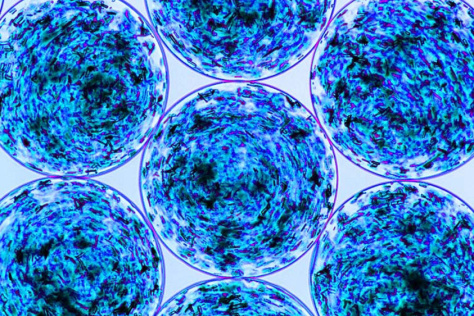
The Bhatia Lab developed a platform where human-derived liver cells mimic in vitro the daily, cyclical variations seen in the body. The system, described in Science Advances, can be used to study the effects of circadian rhythms on drug metabolism, as well as the timing and size of immune responses to liver infections.

Machine learning helps nanoparticles make the grade

MIT News

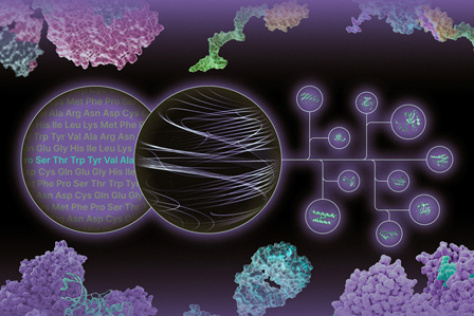
The Traverso Lab developed a system that uses machine learning to accelerate the design of more efficient lipid nanoparticles (LNPs) for delivery of RNA therapies. In a Nature Nanoparticles study, the researchers used the platform to identify effective LNP formulations for various cell types, including cells derived from colorectal cancer.  This research was funded in part by the GO Nano Marble Center at the Koch Institute.