Angelika Amon

News + Videos

Reverse Aging with Yeast Cells

Turning on a particular gene (a transcription factor, NTD80) in aged yeast cells, researchers in the Amon lab have doubled the cells’ usual lifespan. It could offer a new approach to rejuvenating human cells or creating pluripotent stem cells.“There’s a true rejuvenation going on, it took an old cell and made it young again,” says KI Professor Angelika Amon. more...

Targeting a Universal Cancer Weakness

A KI team has identified potential drugs that amplify the cellular stress caused by too many chromosomes, known as aneuploidy. When designing new cancer drugs, biologists often target specific gene mutations found only in cancer cells, or in a subset of cancer cells.  The team of biologists led by Angelica Amon from the Koch Institute is now taking a slightly different approach, targeting a trait shared by nearly all cancer cells. more...

Inside the Lab: Angelika Amon

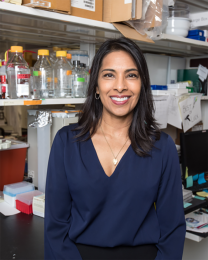
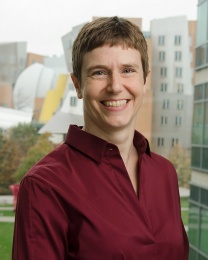
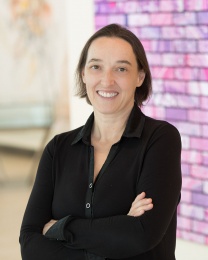
Angelika Amon

Learn more about the Amon lab and how understanding cell division and cell stress may lead to the development of new drugs or compounds that selectively kill cancer cells.     watch...

Professor of Biology Angelika Amon

KI member elected to National Academy of Sciences

Angelika Amon is among 72 newly elected to the National Academy of Sciences, in recognition of distinguished and continuing achievements in original research. more...

Too much of a good thing: Cells with extra chromosomes share detrimental traits

Mammalian cells with extra chromosomes share some common traits that could be exploited to develop cancer treatments, according to MIT biologists. more...

Amon, Golub win cancer prize: Paul Marks Prize recognizes significant research contributions

MIT Professor Angelika Amon and Todd R. Golub of the Broad Institute of MIT and Harvard will share the 2007 Paul Marks Prize for Cancer Research, an award of $150,000, with Gregory J. Hannon from Cold Spring Harbor Laboratory. more...
Massachusetts Institute of Technology