Creating novel devices for cancer detection and monitoring

Early detection and monitoring is critical to mounting effective cancer treatments. The molecular differences that make cancer cells lethal when left unchecked also provide the clues for their detection, identification and visualization.

A New Era in Cancer Research

MIT brings together life scientists and engineers to confront cancer.

Research at the Koch Institute

The Koch Institute brings scientists and engineers together to solve the problems of cancer.  We have identified five areas of research that we believe are critical for rapid progress toward controlling cancer.

Koch Institute Public Galleries

Visitors to the Koch Institute Public Galleries can explore current cancer research projects, examine striking biomedical images, hear personal reflections on cancer and cancer research and investigate the historical, geographical and scientific contexts out of which the Koch Institute emerged.

Koch Institute Facilities

The Koch Institute is more than a building; it is a bold commitment to cross-disciplinary research that will shorten the time needed to transform new discoveries into direct benefits for patients.

People

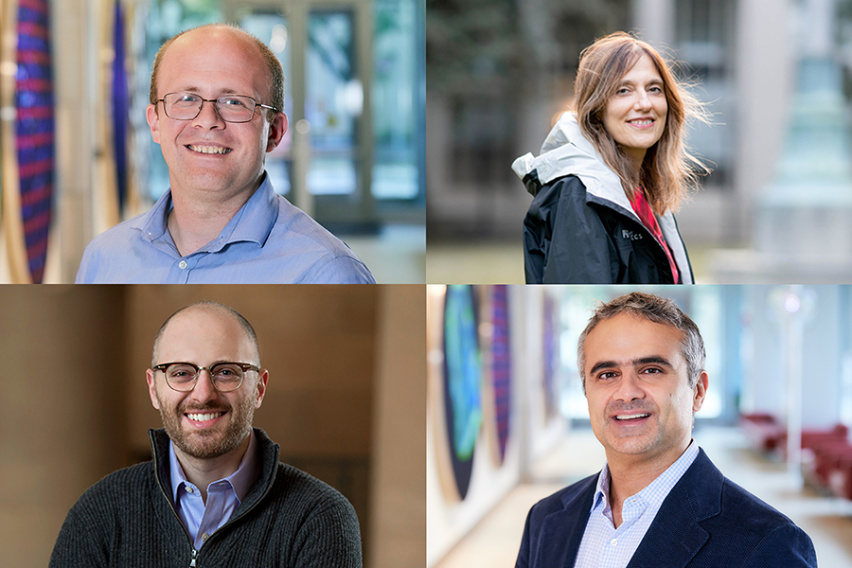
In creating a new era for cancer research, the Koch Institute’s greatest assets are its people. Our world renowned faculty unites leadership in multiple fields of science and engineering with a commitment to truly interdisciplinary collaboration.

Koch Institute Public Galleries

The annual Koch Institute Image Awards were established to recognize and publicly display these extraordinary visuals. Out of nearly 100 submissions, 10 inaugural winning images were selected by an expert panel to appear in the Galleries.

People

Inside the Lab: Michael Cima

MIT Tech TV

Learn more about the work that Professor Cima’s lab is doing to create tiny nanosensors that are chemically sensitive to different molecules – and how they hope these sensors can be used to help determine proper dosage for chemotherapy.

Research

5 4 3 2 1

Our research is conducted in five areas:

Cancer Immunology

Cancer Immunology

Engineering the immune system to fight cancer... more

Personalized Medicine

Personalized Medicine

Advancing personalized medicine through analysis of cancer pathways and drug resistance... more

Metastasis

Metastasis

Exploring the molecular and cellular basis of metastasis... more

Detection + Monitoring

Detection + Monitoring

Creating novel devices for cancer detection and monitoring... more

Nano-based Drugs

Nano-based Drugs

Developing nanotechnology-based cancer therapeutics... more

News + Events

KI Associate Director Elected to NAE

The National Academy of Engineering announced today that K. Dane Wittrup has been elected to the National Academy of Engineering. more...

Modeling Infection Using iPSCs

Using induced pluripotent stem cells (iPSCs), researchers produced liver-like cells that can be infected in the lab to study different patient responses to disease and treatment. more...

New Imaging Technique Sheds Light on Brain Tumors

KI researchers, part of a collaborative team, developed imaging technology to detect unique metabolic activity of brain tumors. more...

Tweaking Reprogramming Factors Shown to Boost Production of Induced Pluripotent Stem (iPS) Cells

Modified reprogramming technique has unexpected impact on the quality of iPS cells, could lead to improved therapies and models of disease. more...

New Insights into How Cancer Cells Fuel Growth

MIT and MGH researchers discover that cancer cells can use glutamine, a plentiful amino acid, to synthesize vital molecules for cancerous growth.  This pathway could provide new drug targets to starve cancers out. more...

Approach

Bridge Project

The Bridge Project is a collaboration between the Koch Institute and the Dana-Farber/Harvard Cancer Center (DF/HCC), designed to bring bioengineering and clinical oncology together to solve today’s most challenging problems in cancer research and care. more

Center of Cancer Nanotechnology Excellence

The MIT-Harvard Center for Cancer Nanotechnology Excellence is a collaborative effort among MIT, Harvard University, Harvard Medical School, Massachusetts General Hospital, and Brigham and Women's Hospital. more

Making Tumors Vulnerable

Watch this animation to learn how the Bhatia lab uses nanomaterials to make tumors more susceptible to treatment. more

Sensing Cancer

Watch this animation to see how a tiny, implantable sensor developed by the Cima lab could enable continuous monitoring of cancer. more

Stopping the Spread of Cancer

Watch this animation to learn about the Gertler lab's efforts to understand and fight the deadly process of metastasis. more

Engineering the Immune System

Watch this animation to learn how the Irvine lab uses nanomaterials-based "cell backpacks" to boost the immune response to cancer. more

Cutting off Cancer's Food Supply

Watch this animation to learn how the Vander Heiden lab is working to understand and target cancer metabolism. more

with/in/sight Lecture Series

Join us for a series of evening programs that bring together diverse expert perspectives to discuss emerging cancer solutions.

The next program will take place on March 5, 2012, and will celebrate the opening of a new exhibition of biomedical images at the Koch Institute and explore the art and science behind the images.

Support

With your support, we aim to improve the lives of cancer patients. Our expert cancer biologists and engineers work in tandem to tackle today's most challenging cancer problems and deliver solutions that lead to longer, healthier lives.

Your contributions can make a difference in the fight against cancer. We welcome your help to continue our progress.

Massachusetts Institute of Technology