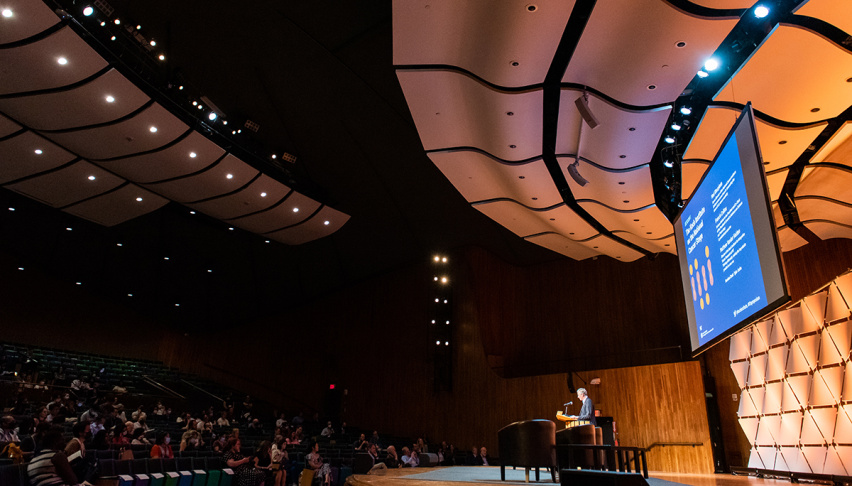
The 12th Annual Koch Institute Summer Symposium will be held on Friday, June 14, 2013 at Kresge Auditorium on the MIT campus. This year’s symposium is focused on Cancer Immunology and Immunotherapy. During the one-day program, cancer researchers, tumor immunologists and clinical oncologists will help to unravel the complexities of the immune system's interactions with developing tumors, as well as provide updates on the latest breakthroughs and challenges in the immunotherapeutic treatment of cancer.
James AllisonProfessor and Chair |
|
![]() |
Jianzhu ChenCottrell Professor of Immunology Dr. Chen seeks to understand the cellular and molecular mechanisms underlying the development and function of the immune system. His lab’s goal is that the knowledge gained will lead to more effective immunotherapies for cancer and other diseases. He focuses on a particular class of immune cells – CD8 T-cells –which play an important role in the ability of the immune system to respond more strongly to threats that have been encountered before. Chen investigates CD8 T –cell responses to the influenza virus and various cancers. His laboratory is also actively engaged in developing improved mouse models of the human immune system, so that its experimental systems most closely reflect the clinical reality. In addition to being a professor at MIT, Dr. Chen is also a co-director of the Center for Infection and Immunity, the Chinese Academy of Sciences. He received a received a B.S. degree from Wuhan University in China and a Ph.D. in Genetics from Stanford University in 1990. He was a post-doctorial fellow and then an instructor at Harvard Medical School before he joined the MIT faculty in the Department of Biology. |
![]() |
Lieping ChenProfessor of Immunobiology, Dermatology and Medicine (Medical Oncology) Dr. Lieping Chen earned his medical degree from the Fujian Medical School in Fuzhou City, China in 1982 and a PhD degree from Drexel University in Philadelphia, Pennsylvania in 1989. He conducted his clinical training in Beijing Union Medical College Cancer Hospital in Beijing, China and did a postdoctoral fellowship in the University of Washington, Seattle, Washington. He worked in the Bristol-Myers Squibb Pharmaceutical Research Institute in Seattle as a research scientist from 1990-1997 and was recruited to Mayo Clinic in Rochester, Minnesota as Associate Professor and became Professor in the Department of Immunology in 2000. In 2004, he joined the faculty of the Johns Hopkins University School of Medicine in Baltimore, Maryland as Professor of Oncology, Professor of Dermatology, Director of Dermatology Research, the Investigator of Institute for Cell Engineering. He assumed current positions at Yale University from September 2010 and is also Adjunct Professor in Johns Hopkins University School of Medicine. Dr. Chen’s laboratory was the first to develop the concept and demonstrate costimulation as an approach for cancer therapy. His laboratory has identified and characterized various molecules in the B7-CD28 and the TNF receptor/ligand superfamilies and elucidates their roles in the modulation of immune responses. His laboratory discovered B7-H1 (PD-L1) and B7-H4 and invented the principles to modulate immune response targeting PD-1/B7-H1, 4-1BB and B7-H4 for the treatment of cancers and autoimmune diseases. Currently, the main interest of his laboratory is to understand molecular, biochemical, structural aspects of new cell surface costimulatory and coinhibitory molecules and their functions in the control of innate and adaptive immunity, as well as translating laboratory findings for immunotherapy of human diseases. Dr. Chen has authored 280+ scientific articles and presented more than 200 symposia and plenary lectures around the world. |
![]() |
Darrell IrvineProfessor, Departments of Biological Engineering and Materials Science & Engineering Darrell Irvine, Ph.D., is a Professor at the Massachusetts Institute of Technology and an Investigator of the Howard Hughes Medical Institute. He also serves on the steering committee of the Ragon Institute of MGH, MIT, and Harvard. His research is focused on the application of engineering tools to problems in cellular immunology and the development of new materials for vaccine and drug delivery. Current efforts are focused on problems related to vaccine development for HIV and malaria, and immunotherapy of cancer. This interdisciplinary work has been recognized in numerous awards, including a Beckman Young Investigator award, an NSF CAREER award, selection for Technology Review’s ‘TR35’, election as a Fellow of the Biomedical Engineering Society, and appointment as an investigator of the Howard Hughes Medical Institute. He is the author of over 70 publications, reviews, and book chapters and an inventor on numerous patents. |
Carl JuneRichard W. Vague Professor in Immunotherapy |
|
![]() |
J. Christopher LoveLatham Family Career Development Associate Professor of Chemical Engineering Dr. Love is a professor of chemical engineering at MIT. He is also an associate member at the Eli and Edythe L. Broad Institute, and associate faculty at the Ragon Institute of MGH, MIT, and Harvard. Dr. Love graduated with a B.S. degree in chemistry from the University of Virginia in 1999 and received his Ph.D. in 2004 in physical chemistry at Harvard University under the supervision of George Whitesides. Following completion of his doctoral studies, he extended his research into immunology at Harvard Medical School with Hidde Ploegh from 2004-2005, and at the Immune Disease Institute from 2005-2007. Dr. Love was a W.M. Keck Distinguished Young Scholar for Medical Research and a Dana Scholar for Human Immunology in 2009, a Life Sciences Research Foundation Postdoc Fellow (Gilead Sciences) in 2004, and a National Defense Science and Engineering Graduate Fellow from 1999-2002. He was also awarded the Foresight Distinguished Student Award in Nanotechnology in 2000. The Love laboratory’s interdisciplinary, team-oriented research combines principles from chemical engineering, interfacial chemistry, and materials science to develop new micro- and nanotechnologies for addressing biological questions in immunology, microbiology, systems biology, and bioprocess engineering. Its broad research objective is to improve the design and implementation of quantitative bioanalytical processes in order to maximize the knowledge gained about the heterogeneities and dynamics of individual cells within a complex population. The Love lab employs these processes to characterize the pathogenesis and immunomodulation of complex immune responses in chronic human diseases, such as HIV/AIDS, multiple sclerosis, Type 1 diabetes, food allergies, and cancer. |
![]() |
David MooneyRobert P. Pinkas Family Professor of Bioengineering David Mooney is the Robert P. Pinkas Family Professor of Bioengineering in the Harvard School of Engineering and Applied Sciences (SEAS) and a Core Faculty Member of the Wyss Institute for Biologically Inspired Engineering at Harvard. His laboratory is focused on the design and synthesis of microenvironments, or niches, that regulate the fate of either transplanted cell populations or cells already resident in tissues. These polymeric systems mimic the native extracellular matrix in their spatiotemporal control of information presentation to cells, and may find special utility in controlling stem cell populations. The applications of these systems include the regeneration of damaged or diseased tissues (tissue engineering), or the targeted destruction of undesirable tissue masses in the body. Prior to joining Harvard, David Mooney served on the faculty at the University of Michigan. He earned his. Ph.D in Chemical Engineering at the Massachusetts Institute of Technology and B.S. in Chemical Engineering at the University of Wisconsin, Madison. He is a member of the National Academy of Engineering, the Chair-Elect of the American Institute for Medical and Biological Engineering, and a NIH MERIT awardee. Additionally, he has received the NSF CAREER award, the Society for Biomaterials Clemson Award, an Einstein Visiting Fellowship, the IADR Distinguished Scientist Award, and the Senior Scientist Award from the Tissue Engineering & Regenerative Medicine International Society. His inventions have been licensed by ten companies for development and potential commercialization and he is active on industrial scientific advisory boards.
|
A. Karolina PaluckaMichael A.E. Ramsay Chair for Cancer Immunology Research A. Karolina Palucka, M.D., Ph.D. is an Investigator and the Director of Ralph Steinman Center for Cancer Vaccine at the Baylor Institute for Immunology Research (BIIR), Dallas, Texas. She has also been a part-time Investigator at Mount Sinai School of Medicine (MSSM) since January 2009. In April 2004, she was awarded the M. Ramsay Chair for Cancer Immunology Research and in 2011 she was awarded the Career Award for Important Contribution to Tumor Immunotherapy by the European Academy of Tumor Immunology Dr. Palucka obtained her M.D. degree from the Warsaw Medical Academy in Poland. She obtained her Ph.D. in tumor immunology from the Karolinska Institute in Stockholm (Sweden) and completed her postdoctoral training in dendritic-cell biology at the Immunology Laboratory of the Hospital Pitie-Salpetriere in Paris. She is an expert in dendritic cell biology, which she has been studying for more than fifteen years. Her main focus is the biology of dendritic cells in cancer and their utilization as vectors for therapeutic vaccination. She established the GMP facility for vaccine generation at BIIR and is a leading force in the design and conduct of clinical trials at BIIR. Together with Drs. Fay and Banchereau, she has launched and now leads the clinical trials program at BIIR which includes multicenter clinical trials. She, along with Dr. Miriam Merad, directs the Human Immune Monitoring Center at MSSM |
|
![]() |
Robert SchreiberAlumni Professor, Pathology and Immunology Robert D. Schreiber is the Alumni Endowed Professor of Pathology and Immunology, Professor of Molecular Microbiology and co-leader of the Tumor Immunology Program of Siteman Comprehensive Cancer Center at Washington University School of Medicine in St. Louis MO. He is also an Affiliate of the Ludwig Institute for Cancer Research; an Associate Director of the Scientific Advisory Board to the Cancer Research Institute; and a co-founder of Igenica, a biotech company focused on producing new monoclonal antibody based cancer therapeutics. For more than 25 years, Schreiber’s work has focused on elucidating the biochemistry and molecular cell biology of cytokines and defining the role they play in promoting immune responses to cancer. Using IFN-unresponsive- and immunodeficient gene-targeted mice, Schreiber and colleagues demonstrated that the unmanipulated immune system could eliminate spontaneous and carcinogen-induced primary tumors, maintain tumors in a state of equilibrium (growth dormancy) and sculpt tumor immunogenicity thereby facilitating tumor escape from immune control. These observations led to the Cancer Immunoediting concept that has gained nearly universal acceptance in the last few years. Recently, Schreiber has used genomics approaches to define the mechanisms underlying cancer immunoediting and identify tumor specific mutational antigens for use as highly specific targets for cancer immunotherapy. Robert Schreiber has authored more than 300 peer reviewed and invited publications and has received many honors including the William B. Coley Award for Distinguished Research in Basic and Tumor Immunology from the Cancer Research Institute (2001), the Charles Rodolphe Brupbacher Prize for Cancer Research (2007), and was inducted into the American Academy of Arts and Sciences in 2010. |
![]() |
Cornelia L. TrimbleAssociate Professor Dr. Connie Liu Trimble attended Princeton University, where she completed a double major in engineering and in the Woodrow Wilson School of Public and International Affairs. She completed her MD at Vanderbilt University School of Medicine. She came to Johns Hopkins to earn a Master's degree in the JHU Writing Seminars, before training in anatomic pathology at Cornell-New York Hospital. She completed a fellowship in gynecologic pathology, and a residency in Gynecology and Obstetrics at Johns Hopkins Hospital. She is currently Associate Professor of Gynecology, Oncology, and Pathology at Johns Hopkins. Her research focuses on the development and translation of immunotherapies to treat early stage cervical cancer and its precursor lesion, high grade cervical dysplasia. In addition, she continues to work with the State of Maryland's cancer planning effort to improve access to cervical cancer screening and treatment. |
![]() |
K. Dane WittrupAssociate Director, Koch Institute for Integrative Cancer Research Dr. Wittrup is the C.P. Dubbs Professor of Chemical Engineering and Biological Engineering at MIT and Associate Director of MIT’s Koch Institute. In 2012, he was elected to the National Academy of Engineering. He was also elected a Fellow of the American Association for the Advancement of Science in 2011. Dr. Wittrup is co-founder and acting Chief Scientific Officer at Adimab and is a fellow of the American Institute of Biomedical Engineers. He has also served as the J. W. Westwater Professor of Chemical Engineering, Biophysics, and Bioengineering at the University of Illinois at Urbana-Champaign. He previously worked as a postdoctoral research associate in Amgen’s Yeast Molecular Biology Group. He holds a Ph.D. and M.S. in Chemical Engineering from the California Institute of Technology and a B.S. in Chemical Engineering from the University of New Mexico. Engineers now have the tools to design biological products and processes at the molecular level. Proteins are of particular therapeutic interest, because proteins mediate most biochemical processes both inside and outside cells. Dr. Wittrup’s laboratory develops protein engineering technology and applies it to the discovery of new biopharmaceuticals. In particular, it uses yeast surface display for the directed evolution of protein expression stability, affinity, and specificity. One focus is on the development of anti-cancer drugs, with quantitative studies of cellular-level pharmacokinetics and pharmacodynamics. |
The symposium provides an opportunity to network with colleagues. For further information, contact Pam DiFraia at 617-253-6403 or pdifraia@mit.edu.
We gratefully acknowledge our sponsors and vendors:
Sponsors
Agilent Technologies
Aveo Oncology Inc.
Boehringer Ingelheim RCV GmbH & Co KG
BristolMyers Company
Cell Signaling Technology Inc.
Janssen RND LLC.
MedImmune
Merrimack Pharmaceuticals
Regeneron Pharmaceuticals, Inc.
Teledyne Isco.Thermo Fisher Scientific
Transgene
Vendors
Beckman Coulter
Cell Signaling Technology Inc.
IDT
LABPREPCO
Qiagen
Taconic
Teledyne Isco